


 English

 January 03, 2026
Most American and British startup founders face complex tax and ownership rules at home, but Dubai’s offshore company setup flips the script. With zero corporate and personal income taxes plus full foreign ownership, entrepreneurs gain control and flexibility rarely possible elsewhere. For those hungry to expand into global markets while sidestepping traditional bureaucracy, the UAE’s regulatory environment stands out as a powerful gateway to international growth and smart financial management.
| Point | Details |
|---|---|
| Offshore Company Benefits | Offshore companies in the UAE offer 100% foreign ownership, complete profit repatriation, and zero corporate taxes, making them attractive for international entrepreneurs. |
| Types of Offshore Jurisdictions | The UAE features distinct offshore jurisdictions like JAFZA, RAK ICC, and Ajman Free Zone, each with unique benefits tailored for different business needs. |
| Formation Process | Establishing an offshore company involves meticulous document preparation and regulatory compliance, requiring the appointment of a local registered agent for ongoing adherence. |
| Operational Restrictions | Offshore entities cannot conduct business directly in the UAE, so entrepreneurs must understand these legal limitations and ensure compliance with KYC and anti-money laundering regulations. |
An offshore company in the United Arab Emirates represents a specialized business structure designed to provide international entrepreneurs strategic advantages in global commerce. Located in designated free zones, these entities allow foreign investors to establish fully owned businesses with unique legal and financial benefits that differ significantly from traditional corporate setups.
The core purpose of creating an offshore company in the UAE involves leveraging tax optimization strategies and establishing a robust legal framework for international business operations. These specialized entities enable entrepreneurs to set up a business structure in Dubai with minimal bureaucratic restrictions, offering maximum flexibility for global trading, asset protection, and financial management.
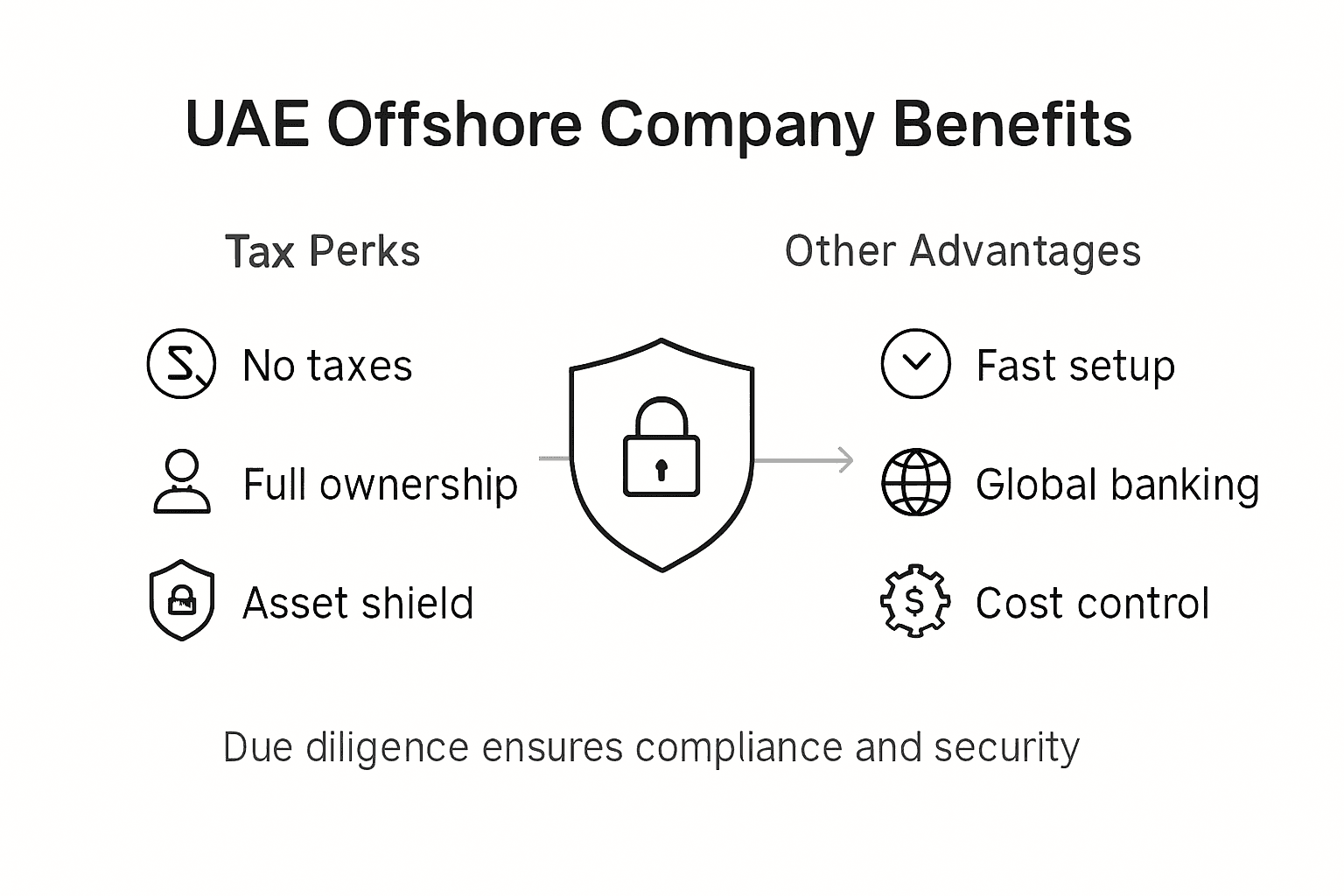
Offshore companies in the UAE typically provide several distinctive advantages. These include 100% foreign ownership, complete repatriation of profits, zero corporate and personal income taxes, no currency restrictions, and simplified regulatory compliance. Entrepreneurs can utilize these structures for holding assets, managing international investments, conducting cross-border trade, and creating efficient wealth management strategies without the complex taxation challenges encountered in many other jurisdictions.
Pro tip: When establishing an offshore company in the UAE, carefully research specific free zone regulations and select a location that best matches your specific business objectives and operational requirements.
Foreign entrepreneurs find the United Arab Emirates an exceptionally attractive destination for offshore company formation, with a robust ecosystem designed to support international business expansion. Strategic benefits of UAE offshore structures include unprecedented financial flexibility and global market accessibility that set these entities apart from traditional business models.
The primary advantages for international entrepreneurs encompass several critical dimensions. Tax optimization stands at the forefront, with UAE offshore companies offering complete exemption from corporate income taxes, personal income taxes, and capital gains taxes. This financial framework enables businesses to maximize profit retention and reinvestment. Additionally, these structures provide 100% foreign ownership without requiring local partnership, a significant departure from restrictive business models in many other jurisdictions.

Beyond tax advantages, UAE offshore companies deliver comprehensive operational benefits. Entrepreneurs gain access to multi-currency banking options, simplified regulatory compliance, and robust asset protection mechanisms. The ability to conduct international transactions with minimal bureaucratic interference makes these structures particularly attractive for global traders, investors, and digital entrepreneurs seeking streamlined business operations. Free zones in locations like Ras Al Khaimah and Jebel Ali offer nuanced advantages that can be strategically leveraged depending on specific business contexts and operational requirements.
Pro tip: Research specific free zone regulations meticulously and select a location that precisely matches your business objectives, considering factors like industry specialization, banking facilities, and long-term growth potential.
The United Arab Emirates offers entrepreneurs multiple specialized offshore jurisdictions, each with unique regulatory frameworks and strategic advantages. Offshore company regulations in the UAE primarily revolve around three key locations: Jebel Ali Free Zone Authority (JAFZA), Ras Al Khaimah International Corporate Centre (RAK ICC), and Ajman Free Zone Authority. These jurisdictions provide distinctive pathways for international business establishment, each designed to cater to different operational needs and investor preferences.
JAFZA stands out as the most prominent offshore jurisdiction, offering robust infrastructure and a highly business-friendly regulatory environment. Known for its comprehensive support system, this free zone enables 100% foreign ownership and provides extensive facilities for international corporations. RAK ICC, in contrast, delivers more flexible and cost-effective company formation processes, making it particularly attractive for small to medium-sized enterprises seeking streamlined business setup with minimal administrative complexity.
Each offshore jurisdiction imposes specific limitations and offers unique benefits. While these entities are prohibited from conducting direct business within UAE territory, they serve critical functions in international trade, investment holding, and asset management. Entrepreneurs must carefully evaluate the nuanced differences between jurisdictions, considering factors such as initial setup costs, ongoing compliance requirements, banking facilities, and potential expansion opportunities. The Ajman Free Zone, though smaller, offers additional alternatives for businesses seeking specialized offshore structures.
This table summarizes jurisdictional differences among UAE offshore options:
| Jurisdiction | Infrastructure Strength | Cost Efficiency | Best For |
|---|---|---|---|
| JAFZA | Advanced facilities | Higher setup fees | Large international corporations |
| RAK ICC | Flexible, modern | Budget-friendly | SMEs and quick setup needs |
| Ajman Free Zone | Niche capabilities | Moderate costs | Specialized asset holding |
Pro tip: Conduct comprehensive due diligence on each offshore jurisdiction’s specific regulations, focusing on your business’s particular operational requirements and long-term strategic goals before making a final selection.
Establishing an offshore company in the United Arab Emirates involves a structured, multi-step process designed to ensure regulatory compliance and operational efficiency. Offshore company formation requirements demand meticulous attention to detail, beginning with critical preliminary steps such as comprehensive name reservation and thorough document preparation.
The initial formation phase requires entrepreneurs to compile a comprehensive documentation package. Key documents typically include valid passports, proof of residential address, detailed business plan, and shareholder information. Entrepreneurs must draft a precise Memorandum and Articles of Association that clearly outlines the company’s operational framework, governance structure, and strategic objectives. Following document submission, regulatory authorities conduct a comprehensive review, which can take anywhere from two to four weeks depending on the specific offshore jurisdiction and complexity of the proposed business structure.
Ongoing compliance represents a critical aspect of maintaining an offshore company in the UAE. Each jurisdiction mandates specific annual renewal requirements and regulatory filings to preserve the company’s active status. Businesses must appoint an approved registered agent responsible for managing regulatory correspondence and ensuring continuous compliance with local regulations. This includes submitting annual financial statements, maintaining accurate corporate records, and promptly addressing any regulatory communications. Entrepreneurs should anticipate recurring administrative tasks such as license renewal, potential updates to corporate documentation, and adherence to evolving regulatory frameworks.
Pro tip: Engage a specialized local corporate services firm with proven expertise in UAE offshore regulations to streamline your formation process and ensure consistent compliance with intricate administrative requirements.
Navigating the offshore company landscape in the United Arab Emirates requires a comprehensive understanding of the intricate legal boundaries and potential operational constraints. Offshore company legal restrictions impose significant limitations that entrepreneurs must carefully consider before establishing their corporate structure.
Operational Constraints represent the most critical legal challenges for offshore entities. These companies are explicitly prohibited from conducting direct business within UAE territory, maintaining a physical presence in the mainland, or soliciting business from UAE residents. Entrepreneurs must recognize these fundamental restrictions as core limitations of their offshore setup. The regulatory framework mandates strict Know Your Customer (KYC) protocols and rigorous anti-money laundering compliance, effectively creating a complex operational environment that demands meticulous attention to legal details and regulatory nuances.
Financial and service-related restrictions further complicate the offshore company landscape. Many offshore entities experience limited access to traditional banking services, face challenges in establishing comprehensive financial infrastructure, and must navigate complex international transaction protocols. These constraints require sophisticated financial planning and potentially alternative banking strategies. Entrepreneurs must also remain vigilant about continuously evolving regulatory requirements, understanding that non-compliance can result in severe penalties, potential dissolution of the corporate entity, or permanent restrictions on future business activities in the region.
Pro tip: Consult with specialized legal and financial advisors who have deep expertise in UAE offshore regulations to develop a comprehensive compliance strategy that anticipates potential regulatory challenges and mitigates operational risks.
The United Arab Emirates offers entrepreneurs three distinct business establishment models: offshore, free zone, and mainland companies, each with unique characteristics, advantages, and operational frameworks. Dubai business activity examples demonstrate the nuanced differences between these corporate structures, which can significantly impact an entrepreneur’s strategic business approach.
Offshore Companies operate with the most restrictive parameters, prohibiting direct business within the UAE and designed primarily for international asset management and holding purposes. In contrast, Free Zone Companies provide a middle ground, allowing 100% foreign ownership and offering tax exemptions within specific geographical zones. These entities can conduct business internationally but face limitations on direct UAE market interactions. Mainland Companies represent the most comprehensive business model, enabling full market access and local business operations, but requiring a local Emirati partner holding a minimum 51% ownership stake.
Here’s a concise comparison of UAE offshore, free zone, and mainland companies:
| Business Structure | Ownership Model | Market Access | Main Tax Benefits |
|---|---|---|---|
| Offshore Company | 100% foreign ownership | No UAE market access | No corporate or personal income tax |
| Free Zone Company | 100% foreign ownership | Limited local access, full international | Tax exemption within free zone |
| Mainland Company | 51% local partner required | Full UAE market access | No tax exemption, regular local taxation |
Each business structure presents unique financial and operational trade-offs. Offshore entities excel in international asset protection and tax optimization, free zones offer streamlined setup processes and targeted industry ecosystems, while mainland companies provide unrestricted access to local market opportunities. Entrepreneurs must carefully evaluate their specific business objectives, considering factors like capital requirements, ownership restrictions, tax implications, and long-term growth strategies when selecting the most appropriate corporate structure in the UAE’s dynamic business landscape.
Pro tip: Conduct a comprehensive analysis of your business goals, anticipated market interactions, and financial strategies before selecting between offshore, free zone, and mainland company structures to ensure optimal alignment with your strategic objectives.
Establishing an offshore company in the United Arab Emirates offers incredible advantages like tax optimization, 100 percent foreign ownership, and asset protection that every international entrepreneur desires. Yet navigating complex regulations, selecting the right jurisdiction, and ensuring ongoing compliance can feel overwhelming. If you want to avoid costly mistakes and delays while maximizing these benefits, expert guidance is essential.
At SetupDubaiBusiness.com, we specialize in helping foreign investors and SMEs simplify every step of offshore company formation in Dubai and across the UAE. Our comprehensive solutions cover everything from document preparation and licensing to banking support and visa services. By leveraging our strong government relationships and in-depth local knowledge, you gain a streamlined experience and faster approvals without sacrificing compliance standards.
Discover how easy and cost-effective it is to capitalize on UAE offshore perks with tailored support from industry experts. Learn more about setting up your offshore company or explore our full range of business setup services designed to launch and grow your international venture. Take the next step now to secure your financial freedom and global flexibility with confidence.
Offshore companies in the UAE enjoy complete exemptions from corporate income taxes, personal income taxes, and capital gains taxes, allowing entrepreneurs to maximize profit retention and reinvestment.
Yes, establishing an offshore company allows for 100% foreign ownership without requiring a local partner, which is a significant advantage compared to other business structures in different jurisdictions.
UAE offshore companies provide benefits such as multi-currency banking options, simplified regulatory compliance, and robust asset protection, making them particularly suitable for international trade and investment management.
Yes, offshore companies are prohibited from conducting direct business within the UAE territory or soliciting business from UAE residents. They must also comply with strict regulations and KYC protocols.

Get a Quote
WhatsApp Italiano
 简体中文
简体中文 Русский
 日本語
日本語 عربى
عربى