


 English

 January 14, 2026
Nearly 80% of new entrepreneurs entering Dubai’s tech scene are international, with American founders leading the surge. Most overseas investors still assume Dubai depends solely on oil, but today the emirate stands out for transparent regulations, zero tax incentives, and business-friendly free zones. If you are a UK or American entrepreneur ready to launch a tech startup, this guide reveals the facts and strategies for successful entry into Dubai’s dynamic market.
| Point | Details |
|---|---|
| Business Transformation | Dubai has evolved from an oil-dependent economy to a global business hub, focusing on technology, trade, and innovation. |
| Company Structures | Various company structures, including Free Zone and Mainland companies, offer unique ownership and operational benefits for international entrepreneurs. |
| Legal and Tax Framework | Businesses in Dubai benefit from zero corporate taxes and simplified licensing processes, making it a financially attractive environment. |
| Common Registration Mistakes | Entrepreneurs should avoid incomplete documentation and misunderstandings regarding ownership structures to ensure smooth registration in Dubai. |
Dubai has rapidly transformed from an oil-dependent economy into a global business powerhouse, challenging long-held misconceptions about its economic capabilities. Robust business ecosystem dynamics reveal a strategic approach to economic diversification that attracts international entrepreneurs and investors.
Traditional perceptions of Dubai as merely an oil-rich destination have been comprehensively dismantled by its deliberate shift towards technology, trade, and innovation. The emirate has systematically developed free trade zones, pro-business policies, and an infrastructure that supports startups and multinational corporations alike. These strategic investments demonstrate a sophisticated understanding of global economic trends, positioning Dubai as a forward-thinking business hub that offers more than just hydrocarbon revenues.
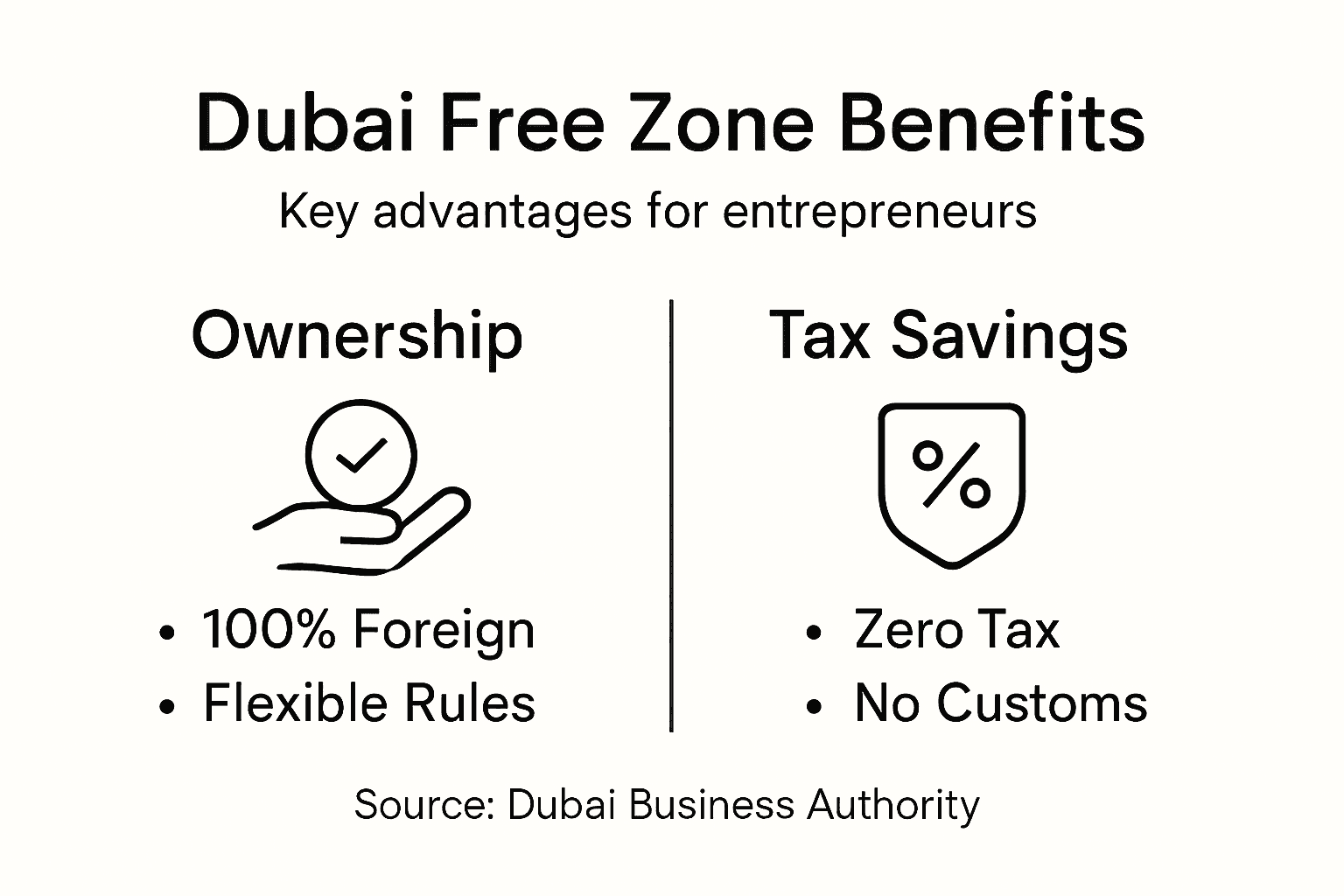
Key characteristics of Dubai’s business landscape include unprecedented foreign ownership regulations, zero corporate taxes, world-class infrastructure, and a geographical location that bridges multiple continents. The government has proactively created an environment that reduces bureaucratic barriers while providing robust support for emerging businesses. By offering incentives like 100% foreign ownership, simplified registration processes, and competitive operational costs, Dubai has become an attractive destination for global entrepreneurs seeking dynamic market opportunities.
Pro tip: Research specific free zone requirements before committing to a business setup, as each zone offers unique advantages tailored to different industry sectors.
Navigating Dubai’s business landscape requires a comprehensive understanding of the various company structures and free zone options available to international entrepreneurs. Free zone company formation offers unique advantages that distinguish Dubai’s business environment from traditional corporate setups worldwide.
Dubai provides several primary company structures for international investors, each with distinct characteristics and benefits. The most common structures include:
Free zones represent a particularly attractive option for international entrepreneurs. These specialized economic areas provide comprehensive benefits such as full foreign ownership, zero corporate and personal income taxes, and streamlined bureaucratic processes. Each free zone is typically tailored to specific industry sectors, including technology, media, finance, and trading, allowing businesses to locate in environments precisely matched to their operational needs.

The following table summarizes the main types of company structures in Dubai and their unique business advantages:
| Company Structure | Ownership Model | Market Access | Key Business Benefit |
|---|---|---|---|
| Free Zone Company | 100% foreign ownership | Within specific free zones | Complete tax exemptions |
| Mainland Company | Requires local partner | All of UAE | Broader regional market reach |
| Offshore Company | 100% foreign ownership | International only | Simplified regulations, privacy |
| Branch Office | Parent company control | All of UAE | Brand extension without full setup |
Pro tip: Conduct thorough research on specific free zone requirements and industry specializations before selecting your company structure to maximize potential strategic advantages.
Understanding the complex legal landscape is crucial for international entrepreneurs looking to establish businesses in Dubai. Free zone business regulations provide a nuanced framework that offers significant flexibility while maintaining stringent compliance standards.
Dubai’s legal framework for business establishment encompasses multiple licensing categories tailored to different operational needs. The primary licensing types include:
Here is a quick reference for Dubai’s main business licenses and their prime use cases:
| License Type | Intended Business Activities | Example Sectors |
|---|---|---|
| Commercial | Trading and resale operations | Retail, import/export |
| Industrial | Manufacturing and production | Factories, food processing |
| Professional | Services and consulting | Legal, design, tech |
| E-commerce | Online and digital businesses | E-retailers, e-services |
| Freelancer | Solo professionals and contractors | Writers, IT, artists |
The new legal framework introduces unprecedented operational flexibility for free zone companies. Recent regulatory changes now allow free zone entities to establish branches and obtain temporary permits for onshore activities, breaking previous geographical restrictions. This evolution enables businesses to expand their market reach while maintaining the tax and ownership advantages of free zone incorporation.
Pro tip: Consult with a local legal expert who specializes in UAE business regulations to ensure your specific business model fully complies with the latest free zone and licensing requirements.
Dubai’s financial landscape offers unprecedented advantages for international entrepreneurs seeking strategic business opportunities. Free zone tax regulations provide a compelling framework of financial incentives that dramatically reduce operational costs and enhance business profitability.
The key financial benefits for businesses establishing themselves in Dubai’s free zones include:
Updated corporate tax legislation has further refined the financial ecosystem, expanding qualifying income categories to include intellectual property, commodity trading, and specialized business activities. These nuanced regulations ensure that businesses meeting specific economic substance and compliance criteria can continue enjoying extraordinary tax advantages. The federal corporate tax rate of 9% applies selectively, allowing most qualifying free zone enterprises to maintain their tax-efficient status.
Pro tip: Engage a specialized tax consultant familiar with UAE free zone regulations to optimize your company’s financial structure and maximize available tax incentives.
Establishing a corporate bank account in Dubai requires meticulous preparation and understanding of the region’s sophisticated financial regulations. Free zone company banking requirements demand comprehensive documentation and strict compliance with Know Your Customer (KYC) and Anti-Money Laundering (AML) protocols.
International entrepreneurs should anticipate the following key documentation and requirements for successful bank account establishment:
The banking landscape in Dubai offers multiple account options tailored to different business models, including traditional corporate accounts, multi-currency accounts, and specialized international transaction accounts. Banks conduct rigorous due diligence, particularly for businesses in high-risk sectors, which can extend the approval process. Transparency in ownership structure, clear business objectives, and meeting regulatory standards are critical for securing and maintaining banking services in Dubai’s competitive financial environment.
Pro tip: Prepare a comprehensive documentation portfolio in advance and consider engaging a local banking consultant to streamline your account opening process and navigate potential compliance complexities.
Navigating the complex business registration landscape in Dubai requires strategic planning and meticulous attention to detail. Offshore company registration demands a comprehensive understanding of potential pitfalls that can derail your entrepreneurial aspirations.
Common mistakes international entrepreneurs frequently encounter during Dubai business registration include:
Entrepreneurs must recognize that Dubai’s business ecosystem operates with precision and expects rigorous standards. Superficial or casual approaches to company registration can result in significant delays, financial penalties, or potential rejection of your application. Understanding the intricate details of free zone regulations, maintaining transparent communication with authorities, and investing time in thorough preparation are crucial strategies for successful business establishment.
Pro tip: Engage a professional business consultant specialized in Dubai company formation to conduct a comprehensive pre-registration review and identify potential registration vulnerabilities.
Understanding the advantages of Dubai free zones is only the first step toward launching a successful company in one of the world’s most dynamic business hubs. The challenges of navigating complex free zone company formation, mastering licensing requirements, and ensuring full compliance can be overwhelming without expert guidance. Key pain points like selecting the right license type, complying with ownership regulations, and streamlining bank account setup are critical to your business’s early success.
At SetupDubaiBusiness.com, we specialize in transforming these challenges into smooth opportunities. Our professional services cover every essential stage from initial registration and legal compliance to banking and visa facilitation. Benefit from our deep understanding of Dubai’s unique business landscape and our close relationships with regulatory authorities. Whether you are establishing a free zone company, a mainland entity, or exploring offshore options, our team provides tailored solutions that save you time and reduce risk.
Don’t let uncertainty slow your entry into Dubai’s thriving market. Discover how to turn the free zone advantages discussed in the article into tangible growth for your business now. Visit our comprehensive business setup page at https://setupdubaibusiness.com and get started with expert consultancy that ensures you capitalize on all Dubai has to offer.
Establishing a business in a free zone offers several advantages, including 100% foreign ownership, zero corporate and personal income taxes, and full profit repatriation. Free zones also provide simplified administrative processes and specific industry-focused communities.
Free zones allow 100% foreign ownership and are limited to operations within designated areas, while mainland companies require a local partner but can operate across the entire region. This difference significantly impacts market access and ownership dynamics.
The primary company structures in Dubai’s free zones include Free Zone Companies, Offshore Companies, and Branch Offices. Each structure has unique benefits regarding ownership, market access, and operational flexibility.
To open a bank account in a free zone, you typically need a valid trade license, shareholder identification, a detailed business plan, passports of shareholders, and proof of address. Compliance with Know Your Customer (KYC) and Anti-Money Laundering (AML) regulations is also vital.
Get a Quote
WhatsApp Italiano
 简体中文
简体中文 Русский
 日本語
日本語 عربى
عربى