


 English

 February 09, 2026
Setting up a new venture in Dubai often comes with its own set of complexities, especially for British and American entrepreneurs aiming for efficient and cost-effective solutions. Dubai Free Zones stand out by offering unmatched incentives like full foreign ownership, no corporate taxes, and sector-focused environments designed for specific industries. By leveraging these specialized areas, businesses from the United Kingdom and United States can benefit from truly simplified registration and operational freedom, helping you achieve growth and global reach faster than traditional routes.
| Point | Details |
|---|---|
| Dubai Free Zones Offer Strategic Advantages | These zones allow 100% foreign ownership, tax exemptions, and simplified import-export procedures, making them highly attractive for international businesses. |
| Specialized Free Zones Cater to Specific Industries | Different zones are tailored with infrastructure and regulatory support for various sectors, such as technology, finance, and healthcare. |
| Efficient Company Setup Process | Establishing a business in a free zone is streamlined, usually taking 3-10 business days, with clear requirements and minimal bureaucracy. |
| Tax Optimization Opportunities | Free Zone businesses enjoy significant financial benefits including zero corporate and personal income taxes, aiding in global competitiveness. |
A Dubai Free Zone represents a specialized economic area designed to attract foreign investment and provide businesses with unique operational advantages. These strategically created zones offer companies a streamlined pathway to establish and grow their international operations within the United Arab Emirates, with targeted incentives that make business setup remarkably attractive.
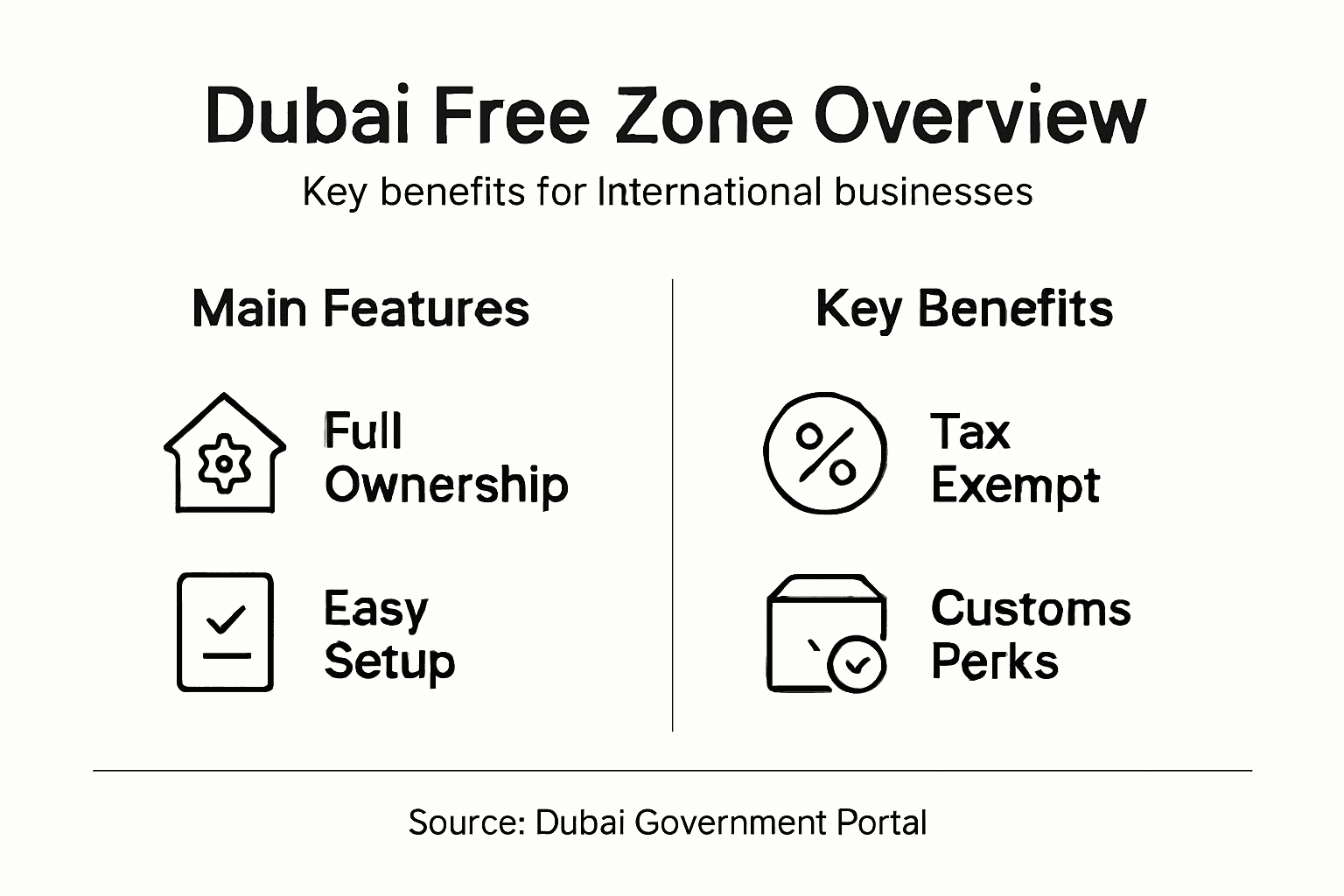
Free zones in Dubai are not just generic business locations, but carefully crafted ecosystems tailored to specific industry sectors. Designated economic zones provide companies unprecedented flexibility and numerous strategic benefits that traditional business environments cannot match. These zones are meticulously designed to support various industries such as technology, finance, trading, media, and manufacturing.
The core benefits of Dubai Free Zones include:
Each free zone in Dubai is engineered to provide sector-specific infrastructure, licensing options, and operational support. Technology companies might find themselves in zones with advanced IT infrastructure, while trading businesses can leverage specialized logistics facilities.
Pro-Tip: Research the specific free zone that aligns most closely with your industry to maximize potential benefits and operational efficiency.
Dubai offers an impressive array of specialized free zones designed to cater to diverse business sectors and international investors. Dubai Integrated Economic Zones represent a sophisticated approach to economic development, creating targeted environments that support specific industries and business needs.
The primary types of Dubai Free Zones include:
Each zone provides unique advantages tailored to its specific sector. For instance, Dubai Internet City offers cutting-edge infrastructure for technology companies, while Jebel Ali Free Zone provides extensive logistics and trading facilities. The zones are strategically designed to attract international businesses by offering sector-specific amenities, regulatory support, and operational flexibility.
Pro-Tip: Carefully evaluate the specific free zone that best matches your business sector and operational requirements to maximize potential benefits and strategic advantages.
Here’s a summary of which Dubai Free Zones suit different business sectors:
| Business Sector | Relevant Free Zone | Main Attraction |
|---|---|---|
| Technology | Dubai Internet City, Silicon Oasis | Advanced digital infrastructure |
| Trade & Logistics | Jebel Ali Free Zone | Proximity to ports, logistics |
| Media & Creative | Dubai Media City | Creative community, media focus |
| Financial Services | DIFC | International finance hub |
| Healthcare | Dubai Healthcare City | Specialized medical facilities |
| E-commerce | Dubai CommerCity | E-commerce support, digital tools |
Dubai Free Zones operate under a sophisticated legal framework that provides businesses with unique operational flexibility and regulatory advantages. Free Zone Authority regulations establish a comprehensive governance structure that allows companies to maintain full business autonomy while benefiting from strategic economic incentives.
The legal framework for Dubai Free Zones encompasses several critical elements:
Businesses operating in free zones must adhere to specific legal requirements, including maintaining accurate financial records, preparing transfer pricing documentation, and demonstrating operational substance. These requirements ensure that companies qualify for the numerous tax and regulatory benefits associated with free zone status.
Pro-Tip: Consult with a local legal expert specializing in Dubai Free Zone regulations to ensure complete compliance and maximize your business’s strategic advantages.
Establishing a business in a Dubai Free Zone involves a structured and relatively straightforward process designed to attract international entrepreneurs. Company registration in Dubai requires careful navigation of specific administrative and legal requirements to ensure smooth business establishment.
The typical company setup process includes the following key steps:
Initial Business Concept Development
Documentation Preparation
Application Submission
License and Approval
Key requirements for free zone company setup typically include:
Free zone authorities have streamlined the process to make company formation accessible and efficient for international investors. Each free zone offers unique advantages, with processing times ranging from 3-10 business days depending on the complexity of the business structure and required documentation.
Pro-Tip: Always consult with a local business setup specialist who understands the nuanced requirements of your specific free zone and business activity.
Dubai Free Zones offer exceptional financial advantages that make them incredibly attractive for international businesses seeking strategic tax optimization. Business tax incentives create a compelling environment for entrepreneurs looking to maximize their financial efficiency and global competitiveness.
The primary tax benefits of Dubai Free Zones include:
Financial implications extend beyond immediate tax savings. Free zone businesses benefit from:
Companies must understand that while tax benefits are substantial, maintaining compliance with Free Zone Authority regulations is crucial. This requires maintaining proper financial documentation, demonstrating operational substance, and adhering to specific reporting standards.
Careful financial planning and professional consultation can help businesses maximize the extensive tax advantages offered by Dubai Free Zones.
Pro-Tip: Engage a specialized tax consultant familiar with Dubai Free Zone regulations to develop a comprehensive financial strategy that optimizes your tax position and ensures full regulatory compliance.
Understanding the nuanced differences between Dubai Free Zones and Mainland Companies is crucial for entrepreneurs planning their business strategy. Mainland versus free zone companies present distinct operational frameworks that can significantly impact business structure and market approach.
Key comparative aspects include:
Ownership Structure:
Market Access:
Taxation Considerations:
Operational Flexibility:
Compare strategic advantages between Dubai Free Zones and Mainland Companies:
| Criteria | Free Zone Company | Mainland Company |
|---|---|---|
| Foreign Ownership | 100% allowed | Up to 49% (51% local partner) |
| Domestic Market Access | Indirect (via local distributor) | Direct, unrestricted |
| Tax Environment | Tax exemptions, profit repatriation | Standard UAE corporate tax applies |
| License Scope | Industry specific | Multiple activities often permitted |
The choice between free zone and mainland companies depends on specific business objectives. Export-oriented businesses often find free zones more attractive, while companies targeting local UAE consumers typically prefer mainland setups. Strategic considerations should include long-term business goals, target market, capital requirements, and desired operational autonomy.
Selecting the right business structure requires carefully evaluating your specific commercial objectives and regulatory environment.
Pro-Tip: Conduct a comprehensive analysis of your business model and consult with local legal experts to determine the most advantageous company registration strategy.
Navigating the complex world of Dubai Free Zones can be overwhelming. Whether you are aiming for 100% foreign ownership, tax exemptions, or sector-specific advantages, understanding the legal framework and company setup process is essential. You may face challenges such as selecting the right free zone for your industry, fulfilling documentation requirements, and complying with regulatory standards to fully benefit from tax relief and operational flexibility.
At SetupDubaiBusiness.com, we specialize in simplifying this journey. Our expert team provides tailored support on business registration, licensing, and legal compliance, ensuring quick approvals and hassle-free company formation within Dubai Free Zones. Benefit now from our efficient, cost-effective services designed to fast-track your entry into the Dubai market. Discover how our personalized consultancy can help you maximize your Dubai Free Zone advantages by visiting Setup Dubai Business.
Ready to capitalize on Dubai Free Zone incentives and expand your global reach? Take the first step today with Setup Dubai Business. Your seamless business setup experience starts here.
A Dubai Free Zone is a specialized economic area designed to attract foreign investment by offering unique operational advantages, including tax exemptions and 100% foreign ownership.
The main benefits include full foreign ownership, complete corporate tax exemption, simplified customs procedures, rapid company setup, and access to various global markets.
Each Dubai Free Zone operates under an independent regulatory environment, allowing businesses to maintain autonomy while benefiting from tailored regulations, tax optimization, and licensing flexibility.
The company setup process involves defining your business concept, preparing necessary documentation, submitting your application, and obtaining the required licenses and approvals, with processing times typically ranging from 3 to 10 business days.
Get a Quote
WhatsApp Italiano
 简体中文
简体中文 Русский
 日本語
日本語 عربى
عربى