


 English

 January 12, 2026
Most American and British entrepreneurs are surprised to discover that Dubai offers some of the most flexible business structures in the world. With offshore companies providing 100 percent foreign ownership, zero corporate tax, and global banking access, Dubai has become a magnet for international investors seeking efficient expansion. This introduction will clarify how offshore entities differ from mainland and free zone businesses, highlighting the key advantages that make Dubai a smart choice for American business owners and ambitious investors.
| Point | Details |
|---|---|
| UAE Offshore Companies | They offer complete foreign ownership, zero corporate tax, and enhanced privacy, making them ideal for international business operations. |
| Types of Offshore Entities | Key structures include free zone offshore, RAK offshore, and International Business Companies (IBCs), each serving different business needs. |
| Registration and Compliance | Entrepreneurs must navigate specific legal requirements and compliance protocols, including due diligence and KYC regulations, during the registration process. |
| Business Structure Comparison | Offshore companies provide maximum privacy and international operational capabilities, in contrast to mainland and free zone options that have more local market access and regulatory requirements. |
A UAE offshore company represents a specialized legal entity designed for international business operations conducted outside the UAE mainland. These strategic corporate structures are established in designated offshore jurisdictions such as Jebel Ali Free Zone Offshore, RAK ICC, and Ajman Offshore, offering entrepreneurs a powerful mechanism for global business expansion.
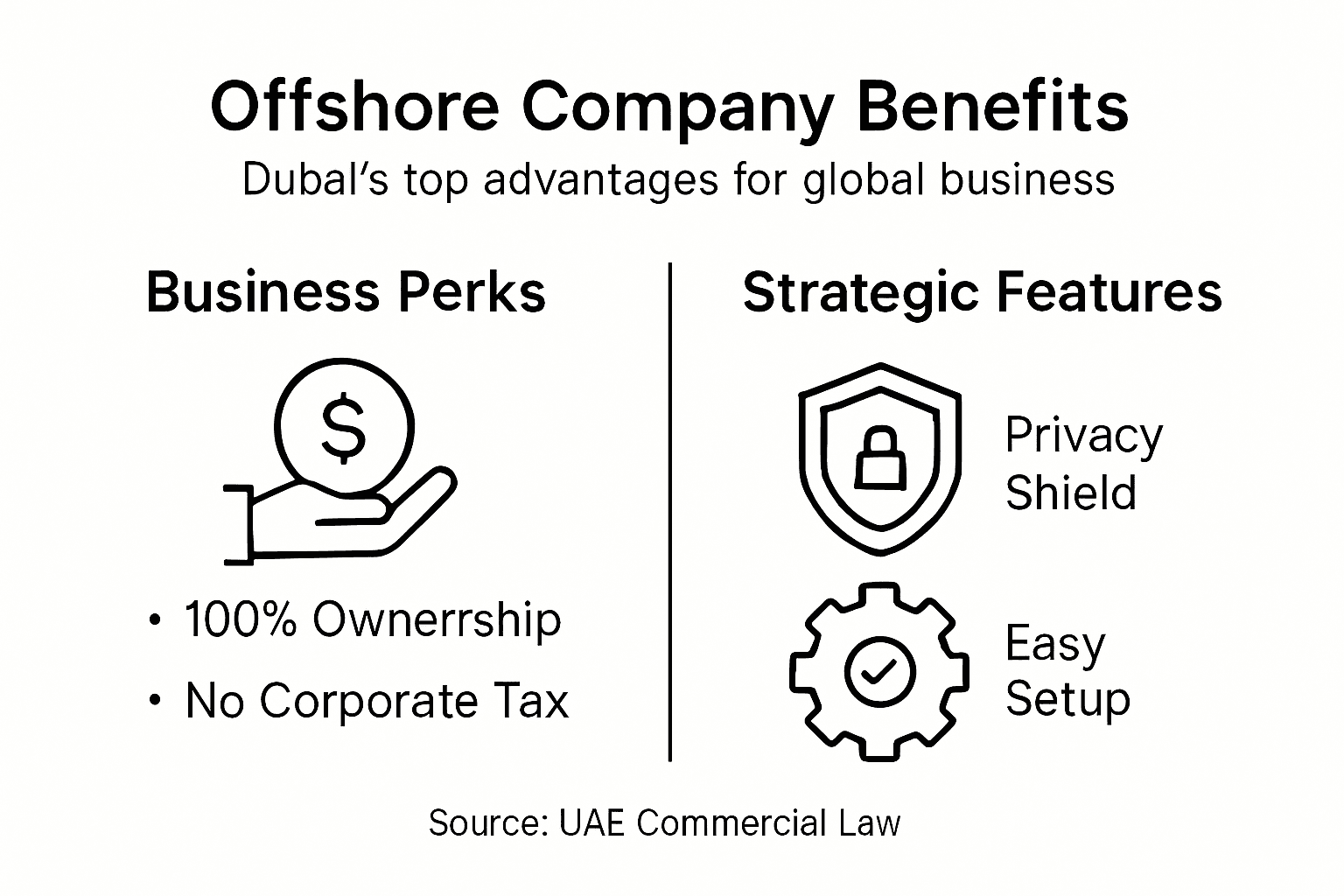
Offshore companies in Dubai provide remarkable advantages that make them attractive for international investors. Offshore jurisdictions in UAE enable businesses to operate with maximum flexibility, including 100% foreign ownership, zero corporate tax liability, and enhanced privacy protections. Entrepreneurs can leverage these entities for multiple purposes, including asset holding, international trading, investment structuring, and intellectual property management.
The key characteristics of a Dubai offshore company include complete foreign ownership permissions, no mandatory requirement for a physical office space, simplified regulatory compliance, and the ability to open corporate bank accounts globally. These companies are particularly beneficial for international entrepreneurs seeking a strategic base for managing cross-border business activities without the complexity of mainland company regulations.
Below is a quick reference for typical offshore company uses and their potential business impact:
| Offshore Use Case | Business Impact | Strategic Benefit |
|---|---|---|
| Asset Holding | Protects assets globally | Enhanced confidentiality |
| International Trading | Simplifies global operations | No local trade restriction |
| Investment Structuring | Optimizes investment returns | Beneficial tax environment |
| IP Management | Secures intellectual property | Global brand protection |
Pro tip: Before establishing an offshore company, conduct thorough research on specific jurisdiction requirements and consult with local legal experts to understand the precise registration procedures and potential tax implications.
Offshore entities in Dubai are strategically designed to cater to different business needs, with three primary types of offshore company structures available: free zone offshore, RAK offshore, and international business companies (IBCs). Each structure offers unique advantages tailored to specific international business requirements, providing entrepreneurs with flexible options for global operations.
Free zone offshore companies, such as those in Jebel Ali Free Zone, are particularly attractive for businesses seeking complete foreign ownership and tax optimization. These entities allow 100% foreign ownership, zero corporate tax, and the ability to conduct international transactions without local trading restrictions. RAK offshore companies, established in Ras Al Khaimah, offer similar benefits with streamlined registration processes and enhanced confidentiality protections.

International Business Companies (IBCs) represent another sophisticated offshore structure, designed for entrepreneurs seeking maximum global flexibility. These entities can engage in international trading, asset management, and investment holding without requiring a physical presence in Dubai. The key differentiators among these offshore entities include registration costs, operational restrictions, banking facilities, and specific licensing requirements that vary across different offshore jurisdictions.
Pro tip: Carefully analyze the specific regulatory requirements and operational constraints of each offshore entity type before making a final selection, as the nuanced differences can significantly impact your business strategy and compliance obligations.
Registering an offshore company in Dubai involves a structured legal framework designed to ensure transparency and compliance with international business standards. Business setup procedures require entrepreneurs to navigate a series of specific documentation and regulatory requirements that vary depending on the chosen offshore jurisdiction and company structure.
The registration process typically involves several critical steps, including preparing comprehensive corporate documentation, conducting due diligence checks, and selecting an approved corporate service provider. Foreign entrepreneurs must submit key documents such as passport copies, proof of address, detailed business plans, and shareholders’ information. Each offshore jurisdiction like Jebel Ali Free Zone, RAK Offshore, or Ajman Offshore has unique requirements, but generally demands a minimum of one shareholder and one director, with the flexibility to appoint corporate entities in these roles.
Legal compliance is paramount in offshore company registration. Entrepreneurs must ensure they meet specific regulatory requirements, including anti-money laundering (AML) regulations, know-your-customer (KYC) protocols, and international reporting standards. The documentation process involves obtaining necessary approvals from regulatory authorities, preparing memorandum and articles of association, and securing appropriate business licenses that align with the intended commercial activities.
Pro tip: Engage a specialized local corporate services firm with expertise in Dubai offshore company registration to navigate complex regulatory requirements and ensure smooth, compliant business establishment.
Offshore companies in Dubai benefit from a highly attractive tax environment characterized by zero corporate tax and minimal regulatory burdens. International entrepreneurs can leverage these financial advantages while maintaining strict adherence to global compliance standards. Offshore company banking requires navigating complex regulatory landscapes that demand meticulous documentation and transparent financial practices.
The banking ecosystem for Dubai offshore entities involves rigorous Know Your Customer (KYC) and Anti-Money Laundering (AML) protocols. UAE banks provide multi-currency accounts with robust international wire transfer capabilities, but account opening processes remain stringent. Entrepreneurs must prepare comprehensive documentation including notarized corporate records, detailed business plans, and proof of economic substance. These requirements ensure that offshore companies demonstrate legitimate business operations and comply with international financial reporting standards.
Complex compliance requirements extend beyond initial banking setup. Offshore companies must maintain alignment with OECD guidelines, international tax transparency regulations, and UAE’s evolving financial reporting standards. This includes maintaining accurate financial records, submitting annual reports, and ensuring that all international transactions are thoroughly documented. Failure to meet these stringent compliance requirements can result in potential account freezing, financial penalties, or revocation of banking privileges.
Pro tip: Engage a specialized financial consultant with expertise in UAE offshore banking regulations to streamline your compliance strategy and minimize potential administrative complications.
Dubai offers entrepreneurs three distinct business structures, each with unique advantages and strategic implications. Business structure comparison reveals critical differences that impact operational flexibility, tax considerations, and market access for international businesses.
Mainland companies provide direct access to the UAE domestic market, allowing businesses to engage in local government contracts and conduct onshore trading activities. These entities require a local sponsor and physical office space, with ownership typically limited to 49% for foreign investors. Free zone companies offer a more attractive alternative, enabling 100% foreign ownership and providing substantial tax incentives, though they are restricted from conducting direct local market transactions.
Offshore entities represent the most globally-oriented structure, designed exclusively for international business operations. Unlike mainland and free zone options, offshore companies cannot operate within the UAE market, but they offer maximum privacy, zero corporate taxation, and minimal regulatory oversight. The choice between these structures depends on specific business objectives, with each model presenting distinct advantages in terms of market access, ownership requirements, operational costs, and compliance complexity.
Here is a comparison of the main Dubai business structures and their strategic features:
| Structure Type | Market Access | Ownership Rules | Tax Treatment |
|---|---|---|---|
| Mainland Company | Full UAE market | 49% foreign stakeholder | Subject to local taxes |
| Free Zone Company | Limited to free zone | 100% foreign ownership | Preferential rates |
| Offshore Company | International only | 100% foreign ownership | Zero corporate tax |
Pro tip: Conduct a comprehensive analysis of your specific business goals and international expansion strategy before selecting a business structure, considering long-term scalability and operational requirements.
Navigating the complexities of offshore company formation in Dubai can be challenging. You want to benefit from 100% foreign ownership, zero corporate tax, and seamless international trading operations without the hurdles of physical office requirements or complicated regulatory compliance. If you are aiming to protect assets, optimize investments, or expand your intellectual property management on a global scale, understanding the nuances of offshore jurisdictions is critical.
At SetupDubaiBusiness.com, we specialize in transforming these challenges into smooth opportunities. Our expert guidance covers every step from selecting the right offshore corporate structure, handling all legal registration procedures, to securing reliable banking solutions compliant with international standards. Don’t let compliance complexities or bureaucratic delays hold you back. Explore our detailed Dubai company formation explained guide and let us help you set up your offshore entity efficiently. Ready to expand your global footprint with confidence Act now and connect with our specialized consultants for tailored support that fast-tracks your business setup at SetupDubaiBusiness.com.
Offshore companies in Dubai offer 100% foreign ownership, zero corporate tax, and enhanced privacy protections, making them attractive for international investors.
You can register free zone offshore companies, RAK offshore companies, and International Business Companies (IBCs), each designed for different international business needs and with unique advantages.
The registration process involves preparing corporate documentation, conducting due diligence, and submitting required documents such as passport copies and proof of address to an approved corporate service provider.
Offshore companies benefit from zero corporate tax and minimal regulatory burdens, but must adhere to strict compliance requirements, including KYC and AML regulations to maintain their banking privileges.

Get a Quote
WhatsApp Italiano
 简体中文
简体中文 Русский
 日本語
日本語 عربى
عربى