


 English

 December 18, 2025
Most American entrepreneurs are surprised to learn that securing a business license in Dubai involves far more than just paperwork. The path to launching a company in this international hub comes with a web of local regulations, activity restrictions, and financial commitments. Over 80 percent of new investors underestimate how specific Dubai’s licensing requirements really are. Clarifying the realities and misconceptions about commercial licenses can help American business owners make sound, confident decisions for their Middle Eastern ventures.
| Point | Details |
|---|---|
| Importance of Licensing | A commercial license is essential for conducting trade in Dubai and requires thorough documentation and adherence to local regulations. |
| Types of Licenses | There are five primary license types in Dubai: Commercial, Professional, Industrial, E-Trader, and Dual, each catering to distinct business needs. |
| Application Process | The licensing process involves several critical steps, including initial business approval and trade name registration, which vary based on business structure. |
| Financial Considerations | Entrepreneurs should budget for initial fees, renewal costs, and possible taxes, and maintain compliance to avoid significant penalties and operational risks. |
A commercial license in Dubai represents an official authorization enabling businesses to conduct trade and commercial activities within the United Arab Emirates. Entrepreneurs seeking to establish their presence in Dubai must navigate a complex but structured licensing process governed by the Dubai Department of Economy and Tourism.
Unlike common misconceptions, obtaining a commercial license involves more than simply registering a business name. The process requires detailed documentation, specific activity classifications, and compliance with local regulatory frameworks. Businesses must precisely define their operational scope, which determines the type of commercial license required. These licenses are categorized based on business activities such as trading, services, professional services, and industrial operations.
The licensing procedure typically involves several key steps that international entrepreneurs must carefully execute. Applicants need to prepare comprehensive documentation including passport copies, initial business plan, activity description, and proof of capital. Foreign investors often mistakenly believe the process is uniform across all business entities, but requirements vary significantly between mainland companies, free zone establishments, and offshore structures.
Key considerations for obtaining a commercial license in Dubai include understanding activity restrictions, capital requirements, and mandatory local sponsorship regulations. Some business activities require specialized approvals from additional government departments, adding complexity to the licensing process. Entrepreneurs must conduct thorough research and potentially engage professional business setup services to ensure full compliance.
Pro Tip for Entrepreneurs: Conduct a comprehensive preliminary consultation with Dubai business setup experts before initiating your license application to streamline the process and avoid potential regulatory complications.
The Dubai Department of Economy and Tourism recognizes several distinct commercial license categories that cater to diverse business needs and operational structures. These licenses are meticulously designed to accommodate different business activities, ensuring entrepreneurs can select the most appropriate authorization for their specific commercial objectives.
Five primary commercial license types dominate the Dubai business landscape:
Each license type carries unique requirements, documentation standards, and regulatory compliance protocols. Entrepreneurs must carefully evaluate their business model, planned activities, and operational scope to select the most suitable license. Factors such as capital investment, physical office requirements, local sponsorship regulations, and intended business activities significantly influence license selection.

Foreign investors should recognize that license selection extends beyond mere administrative formality. The chosen license directly impacts business structure, operational flexibility, taxation implications, and potential expansion strategies. Careful consideration of long-term business goals is crucial when navigating Dubai’s intricate commercial licensing ecosystem.
Pro Tip for License Selection: Conduct a comprehensive business activity analysis and consult with local licensing experts to ensure you choose the most appropriate commercial license for your specific entrepreneurial objectives.
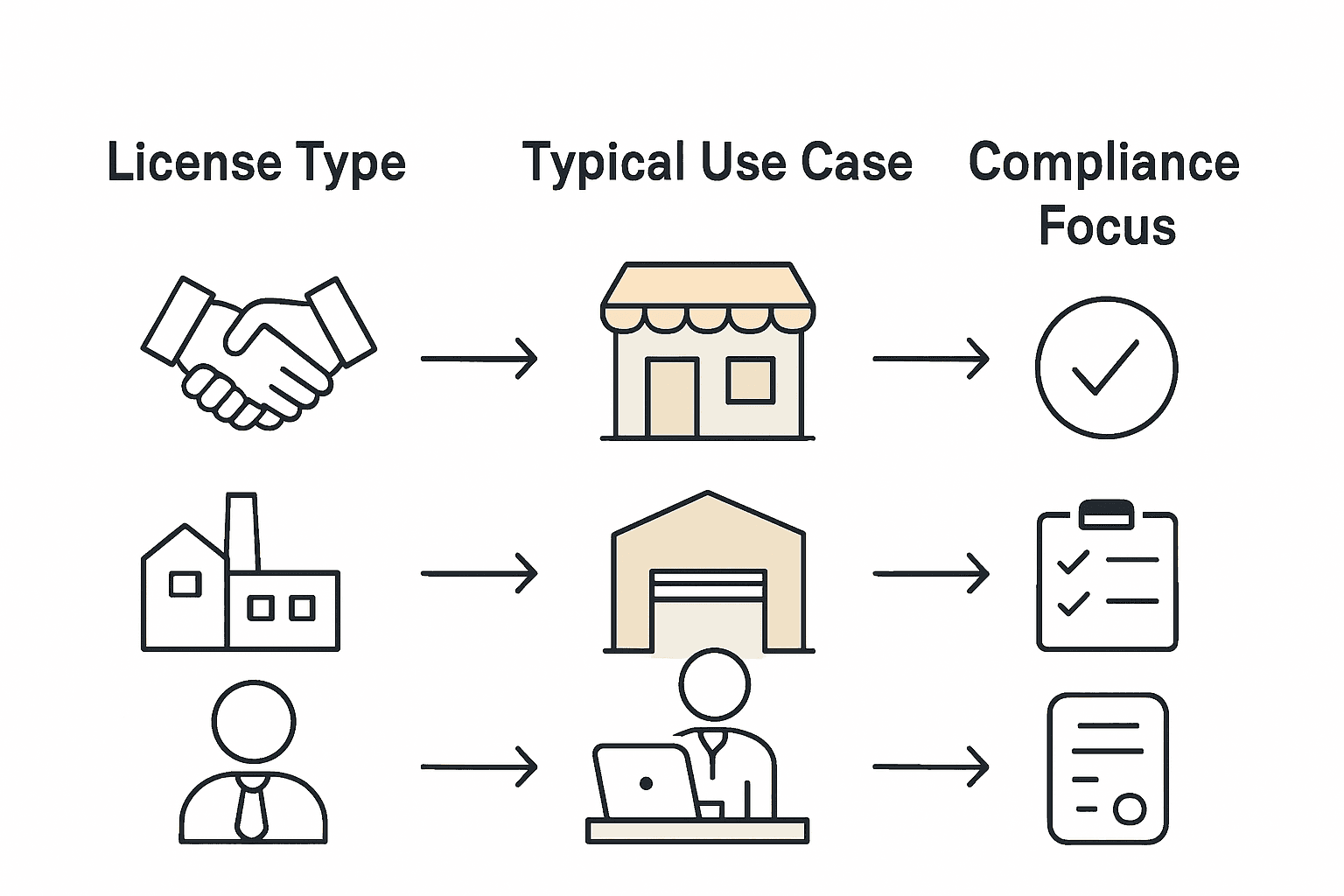
Here’s a side-by-side summary of the main types of commercial licenses in Dubai and how they affect business strategy:
| License Type | Typical Use Cases | Impact on Business Structure | Key Compliance Focus |
|---|---|---|---|
| Commercial License | Import/export, trading, wholesale | Requires physical presence | Product scope, distribution channels |
| Professional License | Consulting, technical services | Allows for flexible office options | Qualifications, project documentation |
| Industrial License | Manufacturing, assembly | Needs industrial premises | Factory standards, safety regulations |
| E-Trader License | Online sales, digital services | Operate from home or online platform | Online activity guidelines |
| Dual License | Combined activities, hybrid models | Mixes physical and digital presence | Multi-sector approval coordination |
The legal framework for obtaining a commercial license in Dubai involves a structured process defined by specific regulations governing economic activities. Entrepreneurs must navigate a comprehensive series of steps that demand meticulous documentation, precise business activity definitions, and strict compliance with local regulatory standards.
The application process typically encompasses several critical stages:
Foreign investors must pay special attention to specific requirements such as local sponsorship regulations, minimum capital investments, and sector-specific approvals. Different business structures like mainland companies, free zone entities, and offshore establishments each have unique documentation and legal compliance protocols that significantly impact the licensing procedure.
Additionally, applicants must be prepared for potential additional approvals from specialized government departments depending on their business activities. Some sectors require extra certifications, professional licenses, or industry-specific clearances that can extend the application timeline. Understanding these nuanced requirements is crucial for a smooth and efficient licensing process.
Pro Tip for Licensing Success: Engage a local business setup consultant who understands the intricate regulatory landscape to streamline your commercial license application and minimize potential bureaucratic complications.
The Commercial Compliance Manual establishes a comprehensive framework defining the rights, responsibilities, and permissible business activities for commercial license holders in Dubai. Understanding these parameters is crucial for entrepreneurs to maintain legal compliance and maximize their operational potential within the UAE’s regulatory environment.
Permitted Business Activities typically fall into several key categories:
Trading Activities
Service Sector Operations
Manufacturing and Production
Business license holders must strictly adhere to their approved commercial activities, with significant legal consequences for operating outside their defined operational scope. Each license specifies precise boundaries, requiring businesses to obtain additional approvals or modify their license if they wish to expand or alter their original business model.
Foreign investors and entrepreneurs should recognize that rights associated with commercial licenses extend beyond mere operational permissions. These licenses provide critical advantages such as the ability to open corporate bank accounts, sponsor employment visas, enter into legal contracts, and establish a formal business presence in Dubai’s dynamic economic landscape. However, these rights come with corresponding obligations including timely license renewal, maintaining accurate documentation, and complying with local labor and taxation regulations.
Pro Tip for Compliance: Conduct an annual comprehensive review of your business activities to ensure continued alignment with your commercial license terms and proactively address any potential regulatory modifications.
Navigating the financial landscape of commercial licensing in Dubai requires a comprehensive understanding of tax implications and associated costs. Entrepreneurs must carefully analyze the financial commitments and potential risks inherent in establishing and maintaining a business presence in the United Arab Emirates.
Cost Breakdown for Commercial Licenses:
The financial landscape includes several critical tax and regulatory considerations:
Entrepreneurs must be acutely aware of potential risks that can significantly impact their business operations. Non-compliance with licensing regulations can result in substantial penalties, including:
Foreign investors should recognize that financial risks extend beyond immediate monetary consequences. Regulatory violations can damage business reputation, complicate future licensing processes, and potentially restrict future business opportunities in the UAE market. Maintaining meticulous financial records, understanding local tax obligations, and proactively managing compliance are crucial strategies for mitigating these risks.
This table outlines key risk factors and financial considerations for Dubai commercial license holders:
| Area | Potential Risk | Mitigation Strategy |
|---|---|---|
| Regulatory Compliance | License suspension/fines | Regular activity audits; ongoing training |
| Financial Reporting | Penalties for errors/omission | Use of qualified local accountants |
| Taxation (VAT, Duties) | Underpayment or late filing | Timely registration and recordkeeping |
| Business Expansion | Restricted activity approval | Advance consultation with legal specialists |
| Reputation and Renewal | Negative record, lost clients | Proactive compliance and public reporting |
Pro Tip for Financial Management: Engage a local accounting professional specializing in UAE business regulations to develop a comprehensive financial compliance strategy that minimizes risks and optimizes your business’s financial performance.
Understanding the complexities of obtaining a commercial license in Dubai can feel overwhelming. From navigating detailed documentation and activity-specific approvals to meeting local sponsorship and capital requirements, entrepreneurs face many hurdles in setting up their business legally and efficiently. Common challenges include selecting the right license type, ensuring compliance with regulatory obligations, and managing costs and potential risks effectively. If your goal is to unlock business opportunities in Dubai with confidence, expert guidance is crucial.
At SetupDubaiBusiness.com, we specialize in turning these challenges into streamlined solutions. Our professional services cover everything from business formation and licensing to corporate compliance and visa assistance. We leverage strong government relationships and deep local expertise to accelerate approvals and reduce bureaucratic delays. Whether you need support selecting the ideal commercial license or require comprehensive end-to-end business setup, we help you avoid costly mistakes and launch your venture faster.
Ready to take control of your Dubai business setup and secure your commercial license without confusion or delays

Visit SetupDubaiBusiness.com now to explore our tailored services and expert consultancy. Start your journey with confidence and save time and money by partnering with Dubai’s trusted business setup professionals today.
A commercial license in Dubai is an official authorization that allows businesses to conduct trade and commercial activities within the UAE. It is essential for entrepreneurs looking to establish their business presence in Dubai.
There are five primary types of commercial licenses in Dubai: Commercial License (for trading activities), Professional License (for service providers), Industrial License (for manufacturing), E-Trader License (for online businesses), and Dual License (for multiple activities).
To apply for a commercial license in Dubai, you must follow a structured process that includes obtaining initial business concept approval, registering a trade name, preparing necessary documentation, and possibly obtaining additional approvals depending on your business activity.
The costs for obtaining a commercial license in Dubai can range from 1,000 – 5,000 AED for the initial license fee, with annual renewal costs between 500 – 2,500 AED, plus trade name registration and potential additional sector-specific approval fees.

Get a Quote
WhatsApp Italiano
 简体中文
简体中文 Русский
 日本語
日本語 عربى
عربى