


 English

 December 29, 2025
Starting a business in Dubai attracts thousands of British and American entrepreneurs every year, yet many are surprised to learn that setup costs can vary by over $15,000 depending on structure and location. Dubai’s reputation for low tax and foreign ownership does not mean a straightforward process. This guide explains the real setup expenses and regulatory steps, helping foreign investors avoid financial mistakes and make smarter decisions for long-term business success.
| Point | Details |
|---|---|
| Understanding Costs | Business setup costs in Dubai can range from $3,000 to $20,000 depending on entity type and location. Different structures, such as mainland and free zone setups, have unique financial implications. |
| Business Structures | Entrepreneurs must evaluate various business structures, including sole proprietorships and LLCs, to select the most suitable option based on their needs and long-term growth strategies. |
| Budgeting for Expenses | Successful budgeting is essential to avoid financial pitfalls, such as underestimating setup costs and failing to account for hidden expenses. Build a detailed budget with a contingency buffer of 20-30%. |
| Regulatory Fees | Understanding legal and regulatory fees in Dubai is critical as they vary by structure and sector. Engage a local consultant to navigate these complexities and ensure compliance. |
Starting a business in Dubai involves understanding the complex landscape of setup expenses, which can vary significantly depending on the type of business entity and location. Business setup costs encompass multiple financial components, including licensing fees, registration expenses, and mandatory regulatory compliance requirements. The overall investment ranges widely, typically between $3,000 to $20,000, based on factors like business structure, free zone selection, and operational complexity.
Dubai offers entrepreneurs multiple business establishment options, each with distinct cost structures. Companies can choose between mainland registrations or free zone business setups, which impact initial and ongoing expenses. Mainland businesses require local sponsorship and have different capital requirements compared to free zone entities, which offer tax advantages and 100% foreign ownership in specific sectors. Licensing costs differ accordingly, with free zone licenses generally ranging from $1,500 to $5,000 annually and mainland licenses potentially costing $2,000 to $10,000.
Key cost components for business setup in Dubai include government registration fees, initial capital requirements, visa processing expenses, and mandatory documentation charges. Investors should budget for expenses such as trade name reservation, initial approval, memorandum of association drafting, and obtaining necessary permits. Additional financial considerations involve office rental deposits, initial bank account setup, and potential legal consultation fees. Understanding these intricate cost elements helps foreign entrepreneurs plan their investment strategy more effectively and avoid unexpected financial challenges.
Pro tip: Request detailed, itemized cost breakdowns from official Dubai business registration authorities to get the most accurate and current setup expense estimates.
Dubai offers entrepreneurs multiple business structures and license categories, each designed to accommodate different operational needs and strategic goals. The Department of Economic Development (DED) governs business registration), providing comprehensive frameworks for establishing companies across various sectors. Business structures in Dubai typically include sole proprietorships, limited liability companies (LLCs), partnerships, and branch offices, with each entity type presenting unique legal and financial implications for foreign investors.
The licensing landscape in Dubai is strategically segmented into multiple categories, reflecting the diverse economic activities permitted. Businesses can obtain different license types based on their primary operational focus: commercial licenses for trading activities, professional licenses for service-based operations, industrial licenses for manufacturing enterprises, and tourism licenses for hospitality-related ventures. Free zone licenses represent a specialized category, offering distinct advantages such as 100% foreign ownership, tax exemptions, and streamlined regulatory requirements. These free zone business structures include Free Zone Establishments (FZE), Free Zone Companies (FZC), and international branch offices, each tailored to specific business scales and operational complexities.
Choosing the appropriate business structure and license category requires careful evaluation of several critical factors. Investors must consider their intended business activities, investment scale, ownership preferences, and long-term growth strategies. Mainland setups demand local sponsorship and have more complex regulatory requirements, while free zone entities offer greater operational flexibility. Key considerations include initial capital requirements, permitted business activities, visa allocation rights, and potential restrictions on operating outside the designated zone. Understanding these nuanced differences helps entrepreneurs make informed decisions aligned with their business objectives and financial capabilities.
Pro tip: Consult with a licensed business setup consultant in Dubai to precisely match your business model with the most suitable structure and license category.
Business setup expenses in Dubai encompass a complex array of financial obligations that investors must carefully navigate. The Department of Economic Development (DED) outlines several mandatory cost components) that entrepreneurs must budget for when establishing a business. Core setup expenses typically include government registration fees, initial license costs, visa processing charges, and administrative documentation expenses. These financial requirements vary significantly depending on the business structure, chosen location, and specific industry sector, making comprehensive financial planning crucial for successful market entry.

Infrastructure and compliance-related expenses represent another critical dimension of business setup costs in Dubai. Minimum design standards for electrical and operational infrastructure impose additional financial requirements that businesses must factor into their initial investment. These expenses can include electrical design consultations, installation compliance fees, mandatory inspections, and specialized permit acquisitions. Entrepreneurs should anticipate these technical compliance costs, which can range from $2,000 to $15,000 depending on the complexity of their business operations and physical workspace requirements.
Breakdown of typical setup expenses reveals multiple financial layers that foreign investors must comprehend. Key cost categories include initial license fees ($1,500-$5,000), government registration charges ($500-$2,000), visa processing expenses ($1,000-$3,000 per visa), office space deposits (potentially 3-12 months of rent), and mandatory initial capital requirements. Free zone and mainland setups present distinct cost structures, with free zones often offering more predictable and potentially lower initial expenses. Factors like business activity, company size, required approvals, and selected location dramatically influence the total investment needed to establish a legal business entity in Dubai.
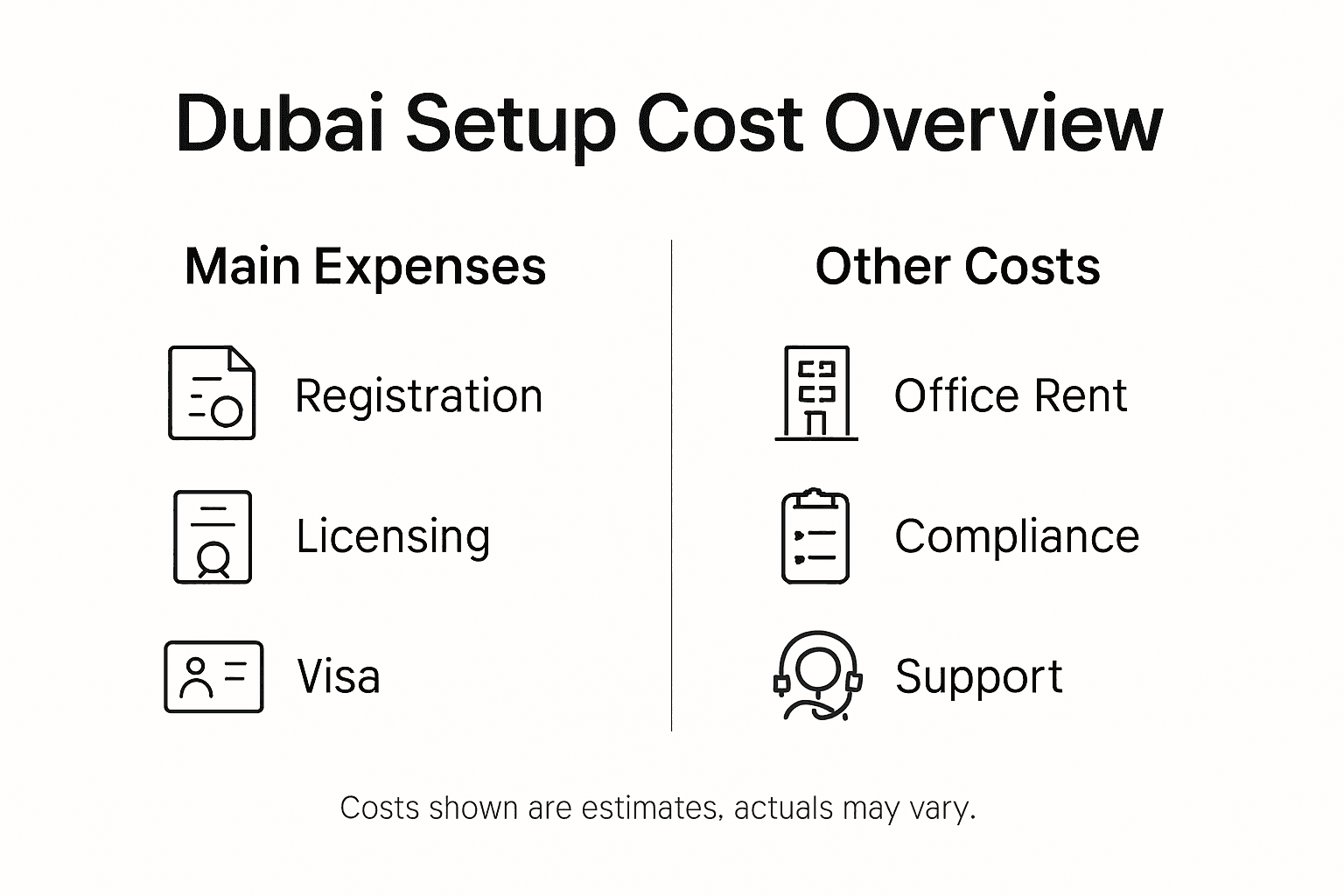
Below is a summary of typical business setup expense categories and their business impact:
| Expense Category | Typical Range | Business Impact |
|---|---|---|
| Registration Fees | $500 – $2,000 | Legal business recognition |
| License Costs | $1,500 – $5,000 | Compliance and industry access |
| Visa Processing | $1,000 – $3,000 | Workforce mobility |
| Office Deposits | 3-12 months rent | Operational readiness |
| Legal Consultation | $1,000 – $5,000 | Regulatory compliance guidance |
| Capital Requirement | $25,000 – $100,000 | Financial stability and support |
Pro tip: Create a detailed, line-item budget spreadsheet that accounts for both mandatory and potential unexpected expenses to ensure financial preparedness during your Dubai business setup process.
Navigating the legal and regulatory fee landscape in Dubai requires a comprehensive understanding of the complex administrative framework. The Department of Economic Development (DED) regulates the intricate system of legal fees) that entrepreneurs must carefully budget and comply with. Regulatory fees encompass multiple mandatory charges including trade license issuance, initial business name reservation, governmental approvals, and annual renewal expenses. These fees vary significantly based on business structure, ownership type, and specific economic sector, making meticulous financial planning essential for foreign investors.
Free zone regulatory requirements present a distinctive fee structure that differs from mainland business setups. Each free zone implements its own specialized fee schedule, typically including company registration costs, licensing expenses, office lease charges, and visa processing fees. These zones offer unique advantages such as tax exemptions and full foreign ownership, but investors must budget for zone-specific regulatory compliance costs. Annual fees can range from $2,000 to $10,000, depending on the business activity, company size, and selected free zone jurisdiction.
Breakdown of critical legal and regulatory fees includes several key components that investors must anticipate. Government processing fees typically range from $500 to $3,000, covering initial business registration, documentation verification, and official approvals. Specialized permit acquisition can add $1,000 to $5,000 to the total expenses, with costs varying based on industry sector and specific regulatory requirements. Additional financial obligations include mandatory initial capital deposits, which can range from $25,000 to $100,000 depending on the business structure and chosen economic activity. Entrepreneurs should also budget for potential legal consultation fees, which can help navigate the complex regulatory landscape and ensure full compliance with Dubai’s stringent business establishment protocols.
Pro tip: Engage a local legal consultant specializing in Dubai business regulations to provide a comprehensive fee breakdown and identify potential cost-saving opportunities during your business setup process.
Investors exploring business opportunities in Dubai face a critical decision between free zone and mainland company formations, each presenting unique financial implications. Free zones offer compelling advantages for international entrepreneurs, including 100% foreign ownership, zero corporate taxes, and simplified regulatory environments. Cost structures differ significantly between these two establishment models, with free zones typically charging higher initial licensing fees but providing more streamlined operational frameworks compared to mainland setups.
Dubai Airport Freezone exemplifies the specialized cost dynamics inherent in free zone business registration. Free zone costs generally range from $3,000 to $15,000 annually, encompassing license fees, office rental, and visa processing. Mainland businesses, conversely, require local sponsorship fees ranging from $5,000 to $20,000 annually, with additional expenses related to mandatory local partnership arrangements. Key financial distinctions include initial capital requirements, with free zones often demanding lower minimum investments and mainland setups necessitating more substantial capital commitments.
A comprehensive cost comparison reveals nuanced financial considerations beyond basic registration expenses. Free zone businesses benefit from complete tax exemptions and unrestricted repatriation of profits, potentially offsetting higher initial setup costs. Mainland companies face more complex financial structures, including mandatory local sponsor fees, which typically represent 51% ownership for service-based industries. Additional cost factors include visa allocation expenses, with free zones offering more flexible and potentially more economical workforce immigration options. Entrepreneurs must carefully evaluate their specific business model, projected revenue, operational scope, and long-term growth strategies to determine the most financially advantageous establishment approach.
Here’s a concise comparison of key cost factors for Free Zone and Mainland business setups in Dubai:
| Cost Factor | Free Zone Setup | Mainland Setup |
|---|---|---|
| Ownership | 100% foreign ownership allowed | Local sponsor required |
| Corporate Tax | Zero | Variable, may apply |
| Initial License Fee | $1,500 – $5,000 annually | $2,000 – $10,000 annually |
| Capital Requirement | Often lower, flexible | Typically higher, strict |
| Sponsorship Fees | Not required | $5,000 – $20,000 per year |
| Office Location | Must be inside free zone | Anywhere in Dubai |
| Visa Allocation | Flexible, zone-based | Restricted, based on activity |
Pro tip: Conduct a detailed financial modeling exercise comparing projected five-year expenses for both free zone and mainland business structures before making a final investment decision.
Entrepreneurs launching businesses in Dubai frequently encounter financial pitfalls that can derail their investment strategy. Comprehensive budgeting research reveals multiple critical errors that inexperienced investors consistently make when planning their business setup. Budgeting mistakes can significantly impact financial sustainability, with some errors potentially consuming up to 30% of initial investment capital through unexpected expenses and poor financial planning.
The most prevalent budgeting errors in Dubai business formation include underestimating setup costs and failing to account for hidden expenses. Detailed business planning studies highlight systematic financial miscalculations that entrepreneurs frequently overlook. These mistakes often involve inadequate contingency funds, overlooking recurring expenses like annual license renewals, visa processing fees, and administrative costs. Foreign investors typically underestimate expenses such as local sponsorship requirements, office rental deposits, and workforce visa allocations, which can add substantial unexpected financial burdens to their initial budget.
A strategic approach to avoiding budgeting mistakes requires comprehensive financial forecasting and meticulous expense tracking. Key areas demanding careful financial scrutiny include initial registration costs, mandatory capital requirements, visa expenses, office setup charges, and potential regulatory compliance fees. Entrepreneurs should develop detailed financial models that incorporate a 20-30% contingency buffer to manage unexpected expenses. Critical budgeting elements to analyze include long-term operational costs beyond initial setup, potential currency exchange fluctuations, and sector-specific financial requirements that might not be immediately apparent during the initial planning stages.
Pro tip: Create a comprehensive, line-item budget spreadsheet with multiple scenario calculations to anticipate potential financial variations and maintain robust financial flexibility during your Dubai business setup process.
Understanding the true cost of setting up a business in Dubai can feel overwhelming. The complexities of licensing fees, visa processing, office deposits, and regulatory requirements often create unexpected financial challenges. If you want to avoid common budgeting mistakes and make informed decisions about your business structure and license category, the key is having precise guidance and expert support.
At SetupDubaiBusiness.com, we specialize in helping entrepreneurs like you navigate every step of your Dubai company formation. From choosing the right free zone or mainland setup to managing all legal and administrative fees, our experienced consultants provide customized solutions that save you time and money. Don’t let unclear costs or procedural hurdles delay your entry into this vibrant market. Visit our business setup services page to get a streamlined, cost-effective path to establishing your new company. Act now to secure faster approvals and access expert advice tailored specifically for your industry and financial goals.
Business setup costs in Dubai typically include government registration fees, initial licensing costs, visa processing charges, and administrative documentation expenses. Additional costs may arise from infrastructure and compliance-related expenses as well.
Free zones usually offer advantages like 100% foreign ownership and no corporate taxes, but they may have higher initial licensing fees. Mainland setups require local sponsorship and incur additional costs related to compliance and ownership arrangements.
The cost of setting up a business in Dubai generally ranges from $3,000 to $20,000, depending on factors such as business structure, location, and operational complexity.
Common mistakes include underestimating setup costs, failing to budget for recurring expenses like annual renewals and visa processing fees, and not allocating a sufficient contingency fund for unexpected expenses.
Get a Quote
WhatsApp Italiano
 简体中文
简体中文 Русский
 日本語
日本語 عربى
عربى