


 English

 December 25, 2025
Nearly 90% of Dubai’s workforce comes from outside the United Arab Emirates, highlighting just how welcoming this market is to international entrepreneurs, including British, Irish, and American business owners. Many see Dubai as a shortcut to scalable business growth and residency perks like the Golden Visa. This article explains why Dubai’s business environment stands out for company formation, emphasizing the blend of opportunity, tax efficiency, and fast-track residency that global founders value.
| Point | Details |
|---|---|
| Strategic Business Environment | Dubai’s combination of zero corporate tax, advanced infrastructure, and pro-business regulations attracts international entrepreneurs. |
| Diverse Business Structures | Entrepreneurs can choose from Mainland, Free Zone, or Offshore structures, each offering unique benefits tailored to different operational needs. |
| Access to Regional Markets | Dubai’s strategic location provides direct market access to the Middle East, Africa, and Asia, enhancing opportunities for expansion. |
| Proactive Legal and Compliance | Engaging local legal consultants is crucial for navigating regulatory complexities and ensuring compliance with business laws in Dubai. |
Dubai represents a transformative global business ecosystem that has rapidly evolved from a regional trading hub to an international economic powerhouse. The city’s strategic positioning combines cutting-edge infrastructure, progressive regulatory frameworks, and a forward-thinking approach to economic development. Dubai’s economic transformation demonstrates remarkable resilience and innovation-driven growth.
The business landscape in Dubai is characterized by several distinctive advantages that attract international entrepreneurs. Key features include a robust digital infrastructure, zero corporate tax environment, 100% foreign ownership possibilities, and world-class connectivity. Unlike traditional markets, Dubai offers entrepreneurs streamlined bureaucratic processes, advanced technological integration, and a multicultural professional ecosystem that supports rapid business scaling. Regulatory frameworks supporting private sector development have positioned Dubai as a premier destination for global business expansion.
Dubai’s economic sectors span multiple high-potential domains including technology, finance, logistics, tourism, and renewable energy. The emirate has strategically diversified its economy, reducing oil dependency and creating robust alternative revenue streams. International businesses find compelling incentives such as strategic geographic location, world-class infrastructure, tax efficiency, and a progressive regulatory environment that actively encourages foreign investment and entrepreneurial innovation.
Pro Business Setup Tip: Research specific free zone options that align with your business model before committing, as each zone offers unique benefits tailored to different industry sectors and operational requirements.
Dubai offers international entrepreneurs multiple business entity structures designed to accommodate diverse operational needs and strategic objectives. Business licensing frameworks provide flexible options that enable global businesses to establish a robust presence in the UAE market. These entity types represent sophisticated legal frameworks tailored to support different business scales and industry requirements.

The primary business entity types in Dubai include three distinct categories: Mainland (onshore) companies, Free Zone entities, and Offshore structures. Mainland Companies allow businesses to operate across the entire United Arab Emirates market, requiring a local sponsor or partner. Free Zone Companies offer 100% foreign ownership, tax exemptions, and specialized infrastructure for specific industry sectors, making them particularly attractive for international entrepreneurs seeking streamlined market entry. Offshore Entities provide international business registration with asset protection capabilities and minimal operational restrictions.
Each business entity type presents unique advantages and compliance requirements. Mainland companies provide comprehensive market access but involve local partnership regulations. Free Zone entities offer maximum foreign ownership and sector-specific incentives, ideal for technology, consulting, and trading businesses. Offshore structures enable international business registration with simplified administrative processes, making them suitable for holding assets, intellectual property management, and global investment strategies.
Here’s a comparison of Dubai’s business entity types and their strategic benefits:
| Entity Type | Market Access Scope | Ownership Structure | Ideal Use Case |
|---|---|---|---|
| Mainland Company | Entire UAE, local markets | Requires local sponsor | Retail, service, broad operations |
| Free Zone | Specific free zones only | 100% foreign ownership | Tech, trading, consultancy, startups |
| Offshore | International operations | 100% foreign ownership | Holding assets, global investment |
Pro Business Selection Tip: Carefully analyze your specific business model, industry requirements, and long-term growth objectives before selecting a business entity type, as each structure offers distinct operational and strategic implications.
Global entrepreneurship dynamics in Dubai represent a transformative opportunity for international business leaders seeking strategic market expansion. The emirate has systematically developed an ecosystem that not only welcomes foreign entrepreneurs but actively incentivizes their economic participation through progressive policies, robust infrastructure, and unparalleled regional connectivity.
The key advantages for foreign entrepreneurs in Dubai extend far beyond traditional business environments. Strategic Market Access allows businesses to leverage Dubai’s unique geographical positioning, providing direct entry points to Middle Eastern, African, and Asian markets. Entrepreneurs benefit from 100% Foreign Ownership options in numerous sectors, eliminating traditional partnership requirements. Additional compelling advantages include zero corporate tax, world-class digital infrastructure, streamlined regulatory processes, and a multicultural professional environment that supports rapid business scaling and innovation.
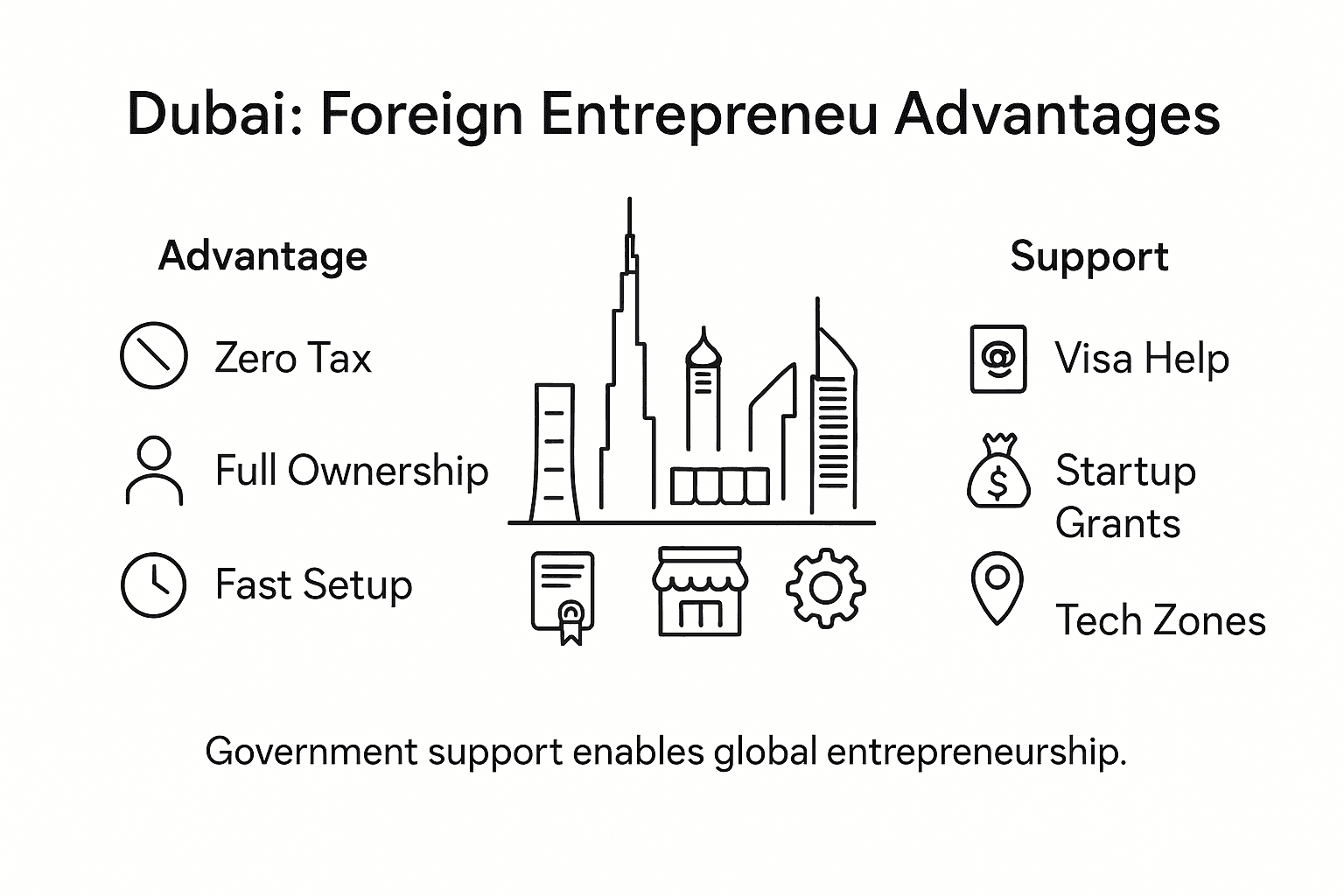
Dubai’s entrepreneurial ecosystem offers unprecedented support mechanisms for international businesses. The government has implemented comprehensive initiatives designed to attract global talent, including simplified business registration processes, flexible visa regulations, and sector-specific incentive programs. Technology startups, professional services firms, trading companies, and international consultancies find Dubai particularly attractive due to its advanced technological infrastructure, strategic free zone developments, and commitment to creating a frictionless business environment that prioritizes international investor interests.
Here’s a summary of major advantages for foreign entrepreneurs launching in Dubai:
| Advantage | Description | Business Impact |
|---|---|---|
| Strategic Location | Gateway to three major continents | Enables regional market expansion |
| Zero Corporate Tax | No tax on corporate profits | Increases net profitability |
| Advanced Infrastructure | Digital and transportation excellence | Supports rapid scaling and innovation |
| Multicultural Workforce | Access to global talent and perspectives | Fosters dynamic international teams |
Pro Entrepreneurial Strategy Tip: Conduct thorough sector-specific research and engage with local business consultants who understand nuanced regulatory requirements before finalizing your market entry strategy to maximize potential opportunities and minimize potential administrative challenges.
Navigating Dubai’s legal landscape requires a comprehensive understanding of regulatory requirements and business registration processes. The emirate’s legal framework is designed to provide a transparent, structured environment for international businesses while maintaining rigorous standards of corporate governance and operational integrity.
The compliance framework in Dubai encompasses multiple critical elements that foreign entrepreneurs must carefully address. Business Licensing represents the foundational requirement, involving detailed documentation and specific procedures for different business entity types. Key compliance obligations include trade name reservation, obtaining appropriate commercial licenses (commercial, industrial, or professional), and adhering to Ultimate Beneficial Owner (UBO) regulations. Businesses must also navigate anti-money laundering protocols, maintain transparent financial reporting, and ensure regular license renewals through authorized government entities.
Foreign businesses must be particularly attentive to the nuanced regulatory landscape, which can vary significantly across different emirates and business sectors. Regulatory challenges include complex tendering processes, localized labor regulations, and potential variations in legal interpretations. Successful navigation requires proactive due diligence, comprehensive legal consultation, and a flexible approach to adapting to evolving regulatory requirements. Critical areas of focus include employment standards, tax compliance, contractual obligations, and maintaining precise documentation to prevent potential operational disruptions.
Pro Compliance Strategy Tip: Engage a local legal consultant specializing in UAE business regulations to conduct a comprehensive compliance audit before establishing your business, ensuring you understand and preemptively address all potential regulatory requirements and potential operational challenges.
Startup ecosystem economics in Dubai represent a uniquely attractive environment for international entrepreneurs seeking cost-effective market entry. The emirate has strategically designed its financial framework to minimize barriers to entry while maximizing potential for business growth, offering a comprehensive suite of financial incentives that distinguish it from traditional global business destinations.
The financial landscape for startups in Dubai is characterized by several key advantages. Free Zone Structures provide 100% foreign ownership capabilities with significant tax benefits, including zero corporate tax and minimal operational expenses. Startup costs vary depending on business entity type and sector, but typically range between $5,000 to $20,000 for initial setup, which includes licensing, registration, and basic infrastructure requirements. Government Incentives play a crucial role, with targeted support programs for innovative ventures, technology startups, and international businesses looking to establish a regional headquarters.
Beyond traditional financial considerations, Dubai offers a nuanced approach to business taxation and investment support. Entrepreneurs benefit from streamlined digital registration processes, competitive infrastructure fees, and sector-specific grant programs designed to attract global talent. The tax environment is particularly advantageous, with most free zone entities enjoying complete tax exemption for up to 50 years, no personal income tax, and no currency restrictions. Additional financial benefits include simplified banking processes, access to international banking networks, and robust government support mechanisms that reduce initial operational risks.
Pro Financial Strategy Tip: Conduct a comprehensive cost-benefit analysis specific to your industry sector, comparing different free zone options and their associated financial incentives to optimize your startup’s financial structure and maximize potential tax advantages.
International business challenges in Dubai represent a complex landscape that requires strategic navigation and proactive risk management. Foreign entrepreneurs must develop a nuanced understanding of potential obstacles to ensure successful market entry and sustainable business operations in this dynamic economic environment.
The most critical challenges for international businesses include regulatory complexities and cultural adaptation. Regulatory Inconsistency emerges as a significant potential pitfall, with variations in legal interpretations across different emirates creating potential compliance risks. Entrepreneurial barriers frequently stem from inadequate market research, limited professional networks, and underestimating the importance of local business protocols. Common mistakes include neglecting due diligence, misunderstanding labor requirements, and failing to establish robust local relationships that facilitate smoother business interactions.
Entrepreneurs must be particularly attentive to specific operational challenges unique to the Dubai market. Payment delays on government contracts, non-transparent agent agreements, and lengthy dispute resolution processes can significantly impact business planning and financial projections. Critical areas of potential risk include underestimating compliance requirements, failing to understand local labor laws, and approaching business relationships without sufficient cultural sensitivity. Successful navigation requires comprehensive market research, engagement with local business networks, and a flexible approach to regulatory adaptation.
Pro Risk Mitigation Strategy Tip: Invest in comprehensive local legal consultation and develop a detailed risk management framework that anticipates potential regulatory and operational challenges before launching your business venture in Dubai.
Starting a business in Dubai offers unmatched global advantages but also involves navigating complex legal frameworks, choosing the right business entity, and understanding compliance requirements. If you want to benefit from 100% foreign ownership, zero corporate tax, and strategic market access yet feel overwhelmed by regulatory details and setup procedures, you are not alone. Many entrepreneurs face challenges like identifying the perfect free zone, managing licensing, and arranging visa and banking solutions efficiently.
SetupDubaiBusiness.com is your trusted partner to transform these challenges into opportunities. We provide end-to-end support including company formation for Mainland LLCs, Free Zone entities, and Offshore setups. Our deep expertise streamlines your registration, licensing, legal compliance, bank account opening, and visa processes so you can focus on growing your venture. Act now to secure fast approvals and cost-effective business solutions tailored to your industry needs. Visit SetupDubaiBusiness.com to start your journey with confidence and leverage Dubai’s thriving ecosystem with expert consultancy by your side.
Dubai offers numerous advantages for entrepreneurs, including zero corporate tax, complete foreign ownership options, advanced digital infrastructure, and a strategic location that provides access to regional markets.
The business registration process in Dubai involves choosing a business entity type, obtaining the necessary licenses, completing documentation, and adhering to regulatory compliance requirements. It is advisable to work with local consultants to navigate the specific requirements for your business type.
Businesses in Dubai can establish various entities, including Mainland companies, which require a local sponsor; Free Zone companies, offering 100% foreign ownership; and Offshore entities, suitable for international operations with asset protection features.
Startup costs in Dubai typically range from $5,000 to $20,000, varying based on the business entity type and sector. These costs include licensing, registration, and initial infrastructure expenses.
Get a Quote
WhatsApp Italiano
 简体中文
简体中文 Русский
 日本語
日本語 عربى
عربى