


 English

 December 24, 2025
Expanding your business to Dubai is no longer just a dream for driven American or British entrepreneurs. With over 40,000 new companies registered in Dubai’s free zones each year, the city has become a global destination for ambitious founders seeking easier pathways to company formation. Understanding the process for setting up your LLC or free zone business is critical for saving time, reducing costs, and ensuring solid legal protection—so you can focus on building the brand you envision.
| Point | Details |
|---|---|
| Understanding Business Structures | Choose between Mainland, Free Zone, and Offshore structures based on market access, ownership rules, and operational goals. |
| Regulatory Compliance is Essential | Stay updated on licensing requirements and local regulations to ensure compliance and avoid penalties. |
| Careful Financial Planning Needed | Budget for startup costs and maintain ongoing compliance with financial and regulatory obligations. |
| Engage Local Expertise | Working with local consultants can streamline the company formation process and help navigate complex regulations. |
Dubai company formation represents a strategic pathway for entrepreneurs seeking to establish a business in one of the Middle East’s most dynamic economic landscapes. Business setup in Dubai involves a comprehensive process of registering a legal business entity that complies with United Arab Emirates regulations while leveraging the region’s robust infrastructure and business-friendly environment.
The process encompasses selecting an appropriate legal structure, which can range from free zone companies to mainland enterprises, each offering distinct advantages for international investors. Entrepreneurs must navigate specific requirements including obtaining necessary licenses, identifying a suitable business location, and meeting local regulatory standards. Dubai provides multiple company formation options tailored to different business models, allowing foreign investors to choose structures that best align with their operational goals and investment strategies.
Key considerations in Dubai company formation include understanding local legal frameworks, determining the optimal business jurisdiction, and preparing required documentation. Foreign entrepreneurs must typically partner with local sponsors or shareholders, depending on their chosen business structure. The process demands careful planning, including selecting a business activity, reserving a company name, obtaining initial approvals from relevant authorities, and completing registration procedures with the Department of Economic Development.
Pro Tip for Entrepreneurs: Research your specific business activity and jurisdiction requirements thoroughly before initiating the company formation process, as regulations can vary significantly between free zones and mainland registration paths.
In Dubai, entrepreneurs have three primary business structure options, each designed to meet different operational needs and strategic objectives. Company structures in Dubai offer unique advantages and constraints that can significantly impact business performance and legal compliance.

Mainland Companies represent the traditional business setup in the United Arab Emirates, allowing direct engagement with the local market. These entities require a local Emirati sponsor who holds 51% ownership, though recent regulatory changes now permit 100% foreign ownership in specific sectors. Mainland companies can conduct business throughout the UAE, interact directly with government entities, and participate in local government tenders, making them attractive for businesses seeking comprehensive market access.
Free Zone Companies provide an alternative structure offering full foreign ownership and strategic benefits. These entities are established in designated economic zones that offer tax exemptions, 100% foreign ownership, and simplified administrative procedures. Free zone businesses enjoy zero corporate and personal income taxes, full capital repatriation, and streamlined customs procedures. However, they face restrictions on conducting direct business within the UAE mainland, typically requiring intermediaries for local transactions.
Offshore Structures are tailored for international operations, providing maximum flexibility for global entrepreneurs. These entities are primarily used for holding assets, international trading, and investment management. Offshore companies benefit from significant tax efficiencies, enhanced confidentiality, and minimal reporting requirements. They cannot conduct business within the UAE but serve as excellent vehicles for international wealth management and cross-border investment strategies.
Pro Tip for Global Entrepreneurs: Carefully analyze your specific business goals, target markets, and operational requirements before selecting a company structure, as the wrong choice can significantly impact your long-term business potential.
Here’s a comparison of Dubai’s main business structure options and their key attributes:
| Business Structure | Market Access | Ownership Rules | Typical Uses |
|---|---|---|---|
| Mainland Company | Full UAE market access | Often needs local partner | Retail, construction, services |
| Free Zone Company | Free zone, limited UAE | 100% foreign ownership | Trading, logistics, tech |
| Offshore Structure | No UAE sales allowed | 100% foreign ownership | Asset holding, investments |
Registering a business entity in Dubai requires a systematic approach that involves multiple strategic steps and careful planning. Company registration process demands meticulous attention to legal requirements and administrative procedures to ensure smooth establishment of your business venture.
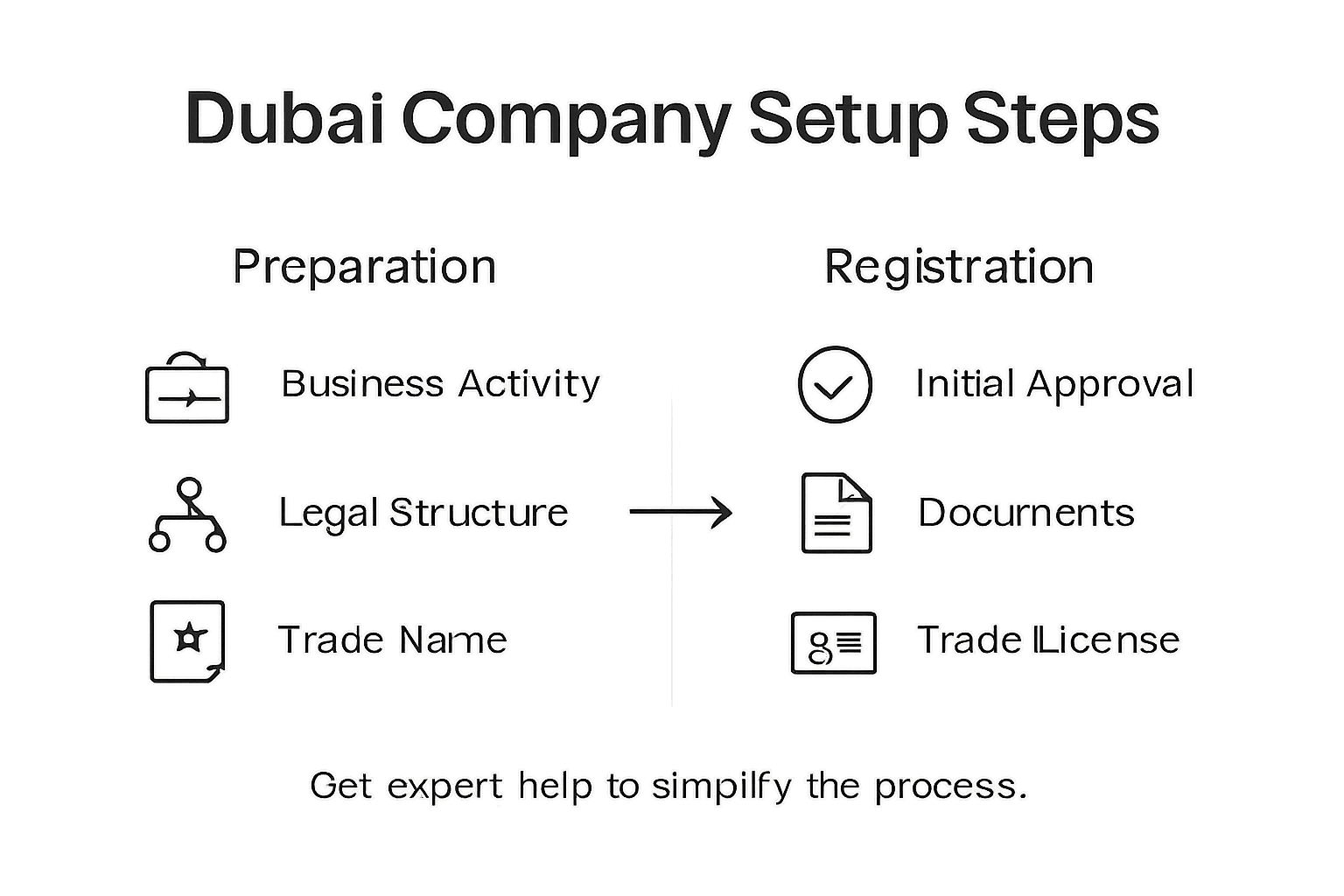
The initial phase involves critical preparatory steps: selecting a specific business activity, choosing an appropriate legal structure, and conducting a comprehensive name reservation process. Entrepreneurs must carefully research permissible business activities within their chosen jurisdiction, whether mainland, free zone, or offshore. This preliminary research helps determine the exact documentation, capital requirements, and potential partnership structures needed for successful registration.
Key registration steps include obtaining initial approvals from relevant government departments, drafting and notarizing the Memorandum of Association, and securing appropriate office space. Trade license acquisition represents a critical milestone in the process, requiring detailed documentation and compliance with local regulatory frameworks. Entrepreneurs must prepare comprehensive documentation including passport copies, business plans, and proof of financial capability. The process typically involves multiple government entities, including the Department of Economic Development, free zone authorities, or mainland registration offices.
The final stages of business registration encompass corporate bank account opening, applying for necessary employee visas, and completing final regulatory submissions. Each step demands precise documentation, financial planning, and adherence to local legal requirements. Depending on the chosen business structure, additional specialized permissions or sector-specific licenses might be necessary.
Pro Tip for Business Registration: Engage a local business setup consultant who understands the nuanced regulatory landscape and can guide you through complex administrative procedures efficiently.
Navigating the complex landscape of business licensing in Dubai requires a comprehensive understanding of local regulatory frameworks and administrative requirements. Licensing procedures in Dubai involve intricate processes that demand precise documentation and strict adherence to governmental guidelines.
The licensing process varies significantly depending on the chosen business structure and specific industry sector. Different regulatory bodies oversee various business activities, including the Department of Economic Development, free zone authorities, and sector-specific regulatory commissions. Entrepreneurs must obtain multiple approvals, including initial business activity approval, trade name reservation, and specific professional or commercial licenses relevant to their operational domain. Key documentation typically includes detailed business plans, passport copies of shareholders, initial capital proof, and comprehensive corporate documentation.
Commercial license requirements represent a critical component of the regulatory landscape. Businesses must demonstrate compliance with local labor laws, financial reporting standards, and ongoing regulatory obligations. This involves maintaining accurate financial records, submitting annual reports, and ensuring timely license renewals. Each license type carries specific requirements, such as minimum capital investments, mandatory insurance coverages, and specific documentation proving the business’s operational capability and financial stability.
The regulatory environment in Dubai is dynamic, with frequent updates to licensing requirements and business regulations. Entrepreneurs must stay informed about potential changes in visa regulations, tax implications, and sector-specific compliance standards. Foreign investors should particularly pay attention to ownership restrictions, local sponsorship requirements, and specific guidelines that may impact their business structure and operational capabilities.
Pro Tip for Regulatory Compliance: Maintain a comprehensive digital and physical file of all business documentation, and schedule regular compliance reviews with a local legal expert to stay ahead of potential regulatory changes.
Establishing a robust financial infrastructure is crucial for businesses operating in Dubai, requiring careful navigation of banking regulations and financial compliance requirements. Corporate banking procedures demand meticulous preparation and understanding of local financial frameworks.
The corporate banking process involves multiple critical steps, including selecting an appropriate banking institution, preparing comprehensive documentation, and meeting specific regulatory requirements. Entrepreneurs must compile a detailed documentation package that typically includes valid trade licenses, shareholder passport copies, company incorporation documents, and comprehensive proof of business address. International investors should anticipate potential challenges, such as stringent Know Your Customer (KYC) protocols and extensive verification processes that can extend the account opening timeline.
Business setup costs represent a significant consideration for entrepreneurs entering the Dubai market. Expenses encompass multiple categories, including initial licensing fees, office space rental, government registration charges, and visa-related costs. Businesses must budget for ongoing compliance expenses, which include annual license renewals, mandatory financial audits, and potential consultation fees. The total investment can range significantly based on business structure, with free zone entities often presenting more cost-effective options compared to mainland registrations.
Ongoing compliance remains a critical aspect of maintaining a successful business in Dubai. Entrepreneurs must commit to annual license renewals, periodic financial reporting, and adherence to evolving UAE labor regulations. This involves maintaining accurate financial records, submitting timely tax declarations, and ensuring continuous alignment with local business standards. Foreign investors should particularly focus on understanding the nuanced regulatory landscape, which can change rapidly and impact business operations.
Pro Tip for Financial Management: Establish a dedicated financial compliance team or consultant who understands local regulations and can proactively manage your business’s financial and regulatory obligations.
Key financial and compliance factors for Dubai businesses at a glance:
| Factor | Importance | Details (Dubai context) |
|---|---|---|
| Startup Costs | High | License, rent, government fees |
| Banking Requirements | Stringent | KYC, detailed documents, interviews |
| Annual Obligations | Essential for compliance | License renewal, audit, reporting |
Starting a business in Dubai is full of exciting opportunities but also complex challenges. From choosing the right company structure like Mainland, Free Zone, or Offshore, to navigating licensing requirements and setting up corporate banking, each step demands careful attention to detail and local expertise. Many entrepreneurs find the registration and compliance process overwhelming without professional support, risking costly delays or compliance issues.
SetupDubaiBusiness.com understands these pain points and offers tailored solutions to make your company formation smooth and efficient. Whether you need guidance on business setup procedures, help obtaining your trade license, or support opening a corporate bank account, their experienced consultants simplify every stage. With strong government relationships and a focus on quick approvals, they reduce waiting times, so you can focus on launching and growing your business.
Start your business setup journey now and gain full access to expert consultancy, legal guidance, licensing facilitation, and banking assistance. Don’t let the complexity slow your success take the first step today and turn your Dubai business vision into reality.

The primary business structures in Dubai include Mainland Companies, Free Zone Companies, and Offshore Structures. Each has different ownership rules and market access, catering to diverse business needs.
To register a business in Dubai, you need to select a specific business activity, choose a suitable legal structure, reserve a company name, obtain initial approvals, draft and notarize the Memorandum of Association, and secure a trade license before completing the registration process.
Local sponsors usually hold 51% ownership in mainland companies, becoming business partners for foreign investors. However, there are provisions for 100% foreign ownership in specific sectors.
After formation, businesses must adhere to ongoing compliance requirements including annual license renewals, maintaining accurate financial records, submitting tax declarations, and staying updated with local labor laws.

Get a Quote
WhatsApp Italiano
 简体中文
简体中文 Русский
 日本語
日本語 عربى
عربى