


 English
 December 23, 2025
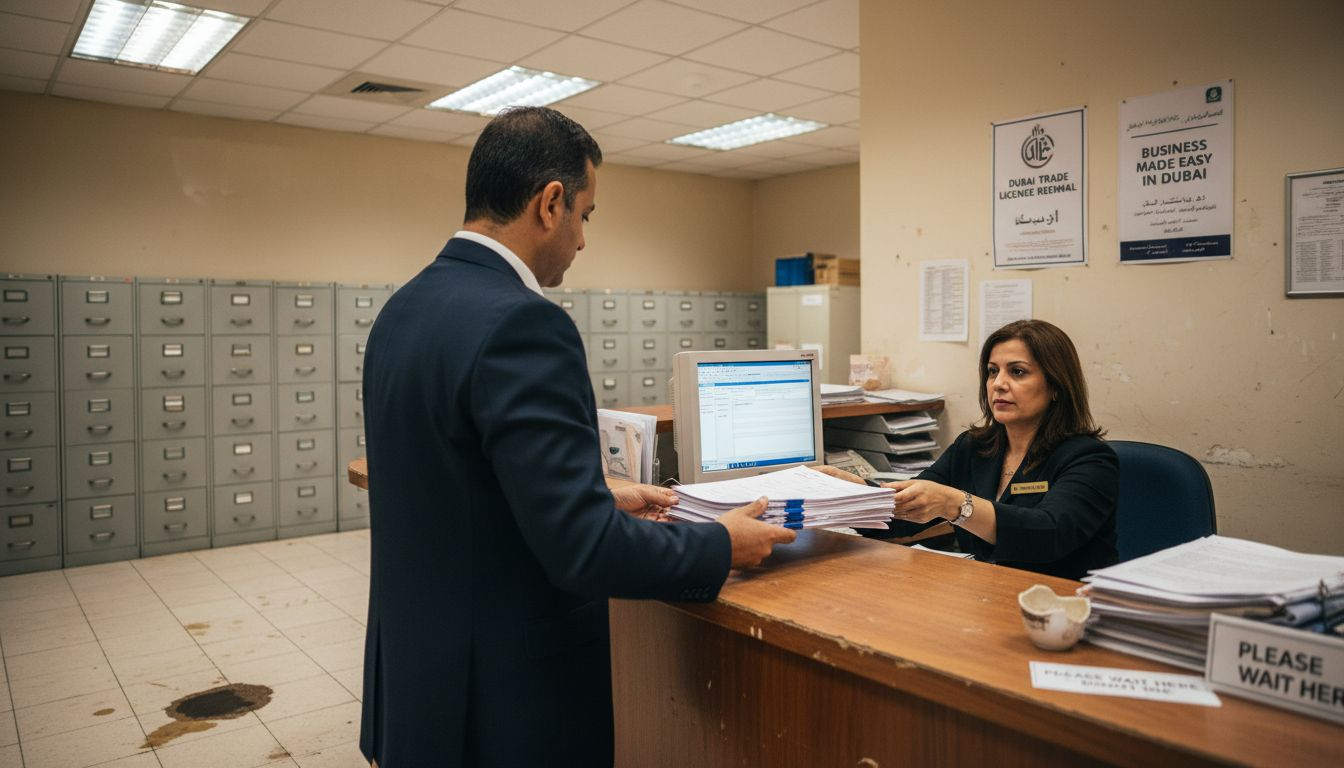
Settling into Dubai’s business scene can be a shock for many American entrepreneurs. The process involves far more than just opening the doors—Dubai issues over 150,000 trade licenses each year, and each carries unique legal expectations. Understanding the full implications of a trade license is crucial for anyone hoping to launch or expand a company in the United Arab Emirates. This guide clarifies what every American business owner needs to know before taking the next step.
| Point | Details |
|---|---|
| Trade License Significance | A trade license in Dubai is essential for legal business operations, defining specific activities and regulatory compliance. |
| License Types | Dubai offers four primary trade licenses: Commercial, Professional, Industrial, and Tourism, each catering to different business needs. |
| Eligibility Requirements | Entrepreneurs must meet specific legal, financial, and operational criteria, including documentation and proof of business viability. |
| Compliance and Risks | Businesses must adhere to local regulations to avoid penalties, highlighting the importance of effective compliance strategies and financial preparedness. |
A trade license in Dubai represents an essential legal authorization that enables businesses to operate commercially within the United Arab Emirates. It serves as an official document issued by the Department of Economic Development that provides comprehensive legal permission for conducting specific business activities.
The trade license functions as more than just a permit – it is a critical regulatory instrument that defines the precise operational boundaries for companies across different sectors. Businesses must obtain this mandatory documentation to legally conduct commercial, professional, or industrial activities in Dubai, ensuring full compliance with local economic regulations.
Each trade license specifies unique parameters that govern a business’s operational scope, including permitted activities, geographical limitations, and specific regulatory requirements. These details are meticulously outlined to prevent unauthorized operations and maintain transparent business practices across the emirate. The license effectively serves as an official contract between the business entity and Dubai’s governmental authorities, establishing clear expectations and legal boundaries.
Pro Tip – License Navigation: Research your exact business category thoroughly before applying, as different sectors have varying license requirements and documentation processes that can significantly impact your application timeline and approval probability.
Dubai offers a comprehensive range of trade licenses designed to accommodate diverse business needs and operational structures. These licenses are categorized into four primary types: Commercial, Professional, Industrial, and Tourism licenses, each tailored to specific business activities and regulatory requirements.
The Commercial License is typically used for trading goods and merchandise, requiring businesses to engage in buying, selling, or distributing products. In contrast, the Professional License caters to service-oriented businesses like consultancies, design firms, and technical services. Notably, Professional Licenses offer unique advantages such as 100% foreign ownership for service-based enterprises, providing greater operational flexibility for international entrepreneurs.
Industrial and Tourism licenses represent specialized categories with distinct operational parameters. The Industrial License supports manufacturing businesses, enabling companies to produce goods within Dubai’s economic zones. Meanwhile, the Tourism License covers businesses directly related to travel, hospitality, and tourism services, including travel agencies, tour operators, and related hospitality enterprises.
Each license type has specific documentation, capital requirements, and regulatory compliance standards. Businesses must carefully evaluate their primary activities, projected operational scope, and long-term strategic goals to select the most appropriate trade license category.
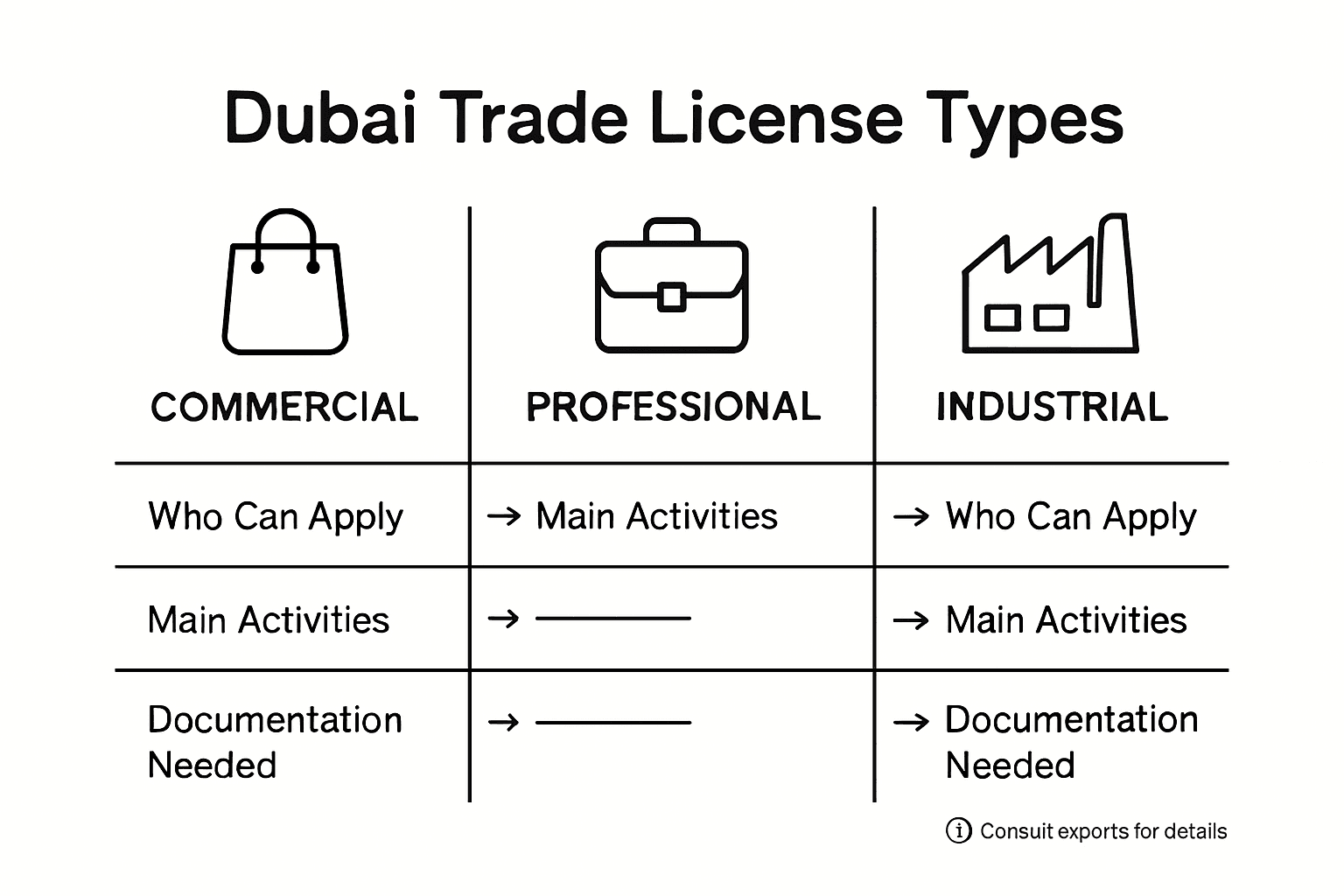
Here’s a summary highlighting the primary trade license types and their core business uses:
| License Type | Typical Business Activities | Ownership Options |
|---|---|---|
| Commercial License | Buying, selling, distribution | May require local partnership |
| Professional License | Consulting, design, technical work | 100% foreign ownership possible |
| Industrial License | Manufacturing, production | Local sponsorship often required |
| Tourism License | Travel, hospitality, tour operation | Varies by sector and activity |
Pro Tip – License Selection: Conduct a thorough assessment of your business model and consult with local business registration experts to ensure you choose the most suitable trade license that aligns with your specific operational objectives and growth strategy.
Eligibility for obtaining a trade license in Dubai involves meeting a comprehensive set of requirements that assess a business’s legal, financial, and operational readiness. Entrepreneurs must carefully navigate these prerequisites, which encompass multiple dimensions of business establishment and regulatory compliance.
The core documentation requirements are extensive and typically include several critical components. Applicants must provide passport copies, a detailed business plan, and potentially a No Objection Certificate (NOC) from current sponsors. The business structure plays a pivotal role in determining specific eligibility criteria, with different requirements for sole proprietorships, partnerships, and corporate entities.

Key eligibility factors include demonstrating financial stability, having a clear business concept, securing a physical office space, and meeting sector-specific regulatory standards. Foreign entrepreneurs must pay special attention to ownership regulations, which vary depending on the business type and chosen economic zone. Some licenses require local sponsorship, while others allow 100% foreign ownership, making thorough research and strategic planning essential.
Additional requirements often involve proving professional qualifications, obtaining initial approvals from relevant government departments, and presenting comprehensive documentation that validates the business’s operational intent. Entrepreneurs must also consider factors like minimum capital requirements, professional experience, and compliance with industry-specific regulations.
Pro Tip – Documentation Preparation: Compile all required documents meticulously in advance, ensuring each paper is correctly translated, authenticated, and organized to streamline the licensing process and prevent unnecessary delays.
The trade license application process in Dubai involves a structured sequence of steps designed to ensure comprehensive business verification, requiring entrepreneurs to navigate multiple administrative checkpoints with precision and attention to detail.
Initial application procedures begin with submitting a comprehensive documentation package to the Department of Economic Development (DED), which includes detailed business plans, passport copies, proposed business activities, and potential proof of financial capability. The approval workflow typically involves multiple stages of review, during which government officials meticulously assess the business concept, legal compliance, and economic viability of the proposed enterprise.
Trade licenses in Dubai are generally valid for one year and mandate an annual renewal process, requiring businesses to demonstrate continued operational legitimacy and regulatory adherence. The renewal mechanism involves updating existing business information, verifying ongoing compliance with current regulations, and paying the requisite renewal fees. Entrepreneurs must proactively track their license expiration dates and initiate renewal procedures well in advance to prevent potential operational disruptions.
Additional critical components of the application and renewal process include obtaining initial business name approvals, securing necessary initial permissions from relevant government departments, and potentially acquiring sector-specific clearances. Foreign entrepreneurs may need to navigate additional requirements related to ownership structures, local sponsorship arrangements, and economic zone regulations.
Pro Tip – Compliance Tracking: Implement a digital tracking system for your trade license documentation, setting automatic reminders at least 60 days before expiration to ensure seamless renewal and uninterrupted business operations.
Trade license expenses in Dubai encompass a complex landscape of direct and indirect financial considerations, requiring entrepreneurs to develop comprehensive budgetary strategies beyond initial licensing fees. The total financial investment includes multiple components such as application costs, mandatory office space rentals, potential local sponsorship fees, and ongoing administrative expenses.
The legal landscape surrounding trade licenses is intricate and demands meticulous compliance. Businesses must adhere to stringent local labor laws, maintain precise financial documentation, and comply with specific tax regulations. Potential risks include significant penalties, potential license suspension, or complete revocation for regulatory infractions. Foreign entrepreneurs must pay particular attention to nuanced legal requirements that can vary dramatically across different business sectors and economic zones.
Financial risks extend beyond direct monetary investments, encompassing potential operational disruptions, regulatory challenges, and unexpected compliance costs. Entrepreneurs should anticipate expenses related to visa processing, potential government-mandated audits, and periodic regulatory updates. The economic environment requires businesses to maintain robust financial reserves and implement adaptive strategies that can respond to evolving regulatory frameworks.
Key risk mitigation strategies involve developing comprehensive compliance protocols, maintaining transparent financial records, and establishing relationships with local legal and business consultancy experts who understand the intricate Dubai regulatory ecosystem. Proactive risk management includes regular legal and financial reviews, staying informed about regulatory changes, and maintaining flexibility in business operations.
This table outlines major compliance risks and how to address them effectively:
| Compliance Risk | Potential Impact | Recommended Mitigation |
|---|---|---|
| Missed license renewal | Business suspension or fines | Automated renewal reminders |
| Incomplete documentation | Application delays or denial | Pre-application document audit |
| Failure to meet capital rules | License rejection or penalties | Regular financial monitoring |
| Regulatory changes | Unexpected compliance costs | Ongoing legal consultation |
Pro Tip – Financial Preparedness: Allocate a minimum of 15-20% of your initial business budget as a contingency fund specifically designed to address unexpected regulatory compliance costs and potential legal consultations.
Navigating the complexities of obtaining a trade license in Dubai can feel overwhelming with strict legal requirements, renewal deadlines, and specific business activity regulations. The challenges of preparing detailed documentation and choosing the right license type for your unique business goals can delay or derail your plans. At SetupDubaiBusiness.com, we understand how crucial it is to secure your trade license smoothly and start operating without hurdles. Our expert team specializes in handling every licensing step, from tailored business setups to compliance management, so you can focus on growth confidently.
Take control of your business future now by partnering with trusted professionals who streamline the licensing process with proven government connections and fast approvals. Visit SetupDubaiBusiness.com to explore comprehensive services including company formation, license acquisition, office solutions, and legal advisory. Don’t let renewal risks or paperwork delays hold you back – start your Dubai business setup journey today and unlock your enterprise potential with ease.
A trade license is a legal authorization that allows businesses to operate commercially, ensuring compliance with local regulations and defining the operational scope for various business activities.
There are four primary types of trade licenses: Commercial, Professional, Industrial, and Tourism licenses, each tailored to specific business activities and regulatory requirements.
Eligibility includes submitting core documentation such as passport copies, a detailed business plan, and possibly a No Objection Certificate (NOC). Additionally, ownership regulations and specific criteria based on business structure must be met.
The application process involves submitting a comprehensive documentation package to the Department of Economic Development (DED), which includes a business plan, passport copies, and the proposed business activities. The approval mechanism may include multiple government reviews.

Get a Quote
WhatsApp Italiano
 简体中文
简体中文 Русский
 日本語
日本語 عربى
عربى